Entertainment news and discussion on TalkFuse.
Nintendo & Lego unveil Donkey new Kong set with official pics
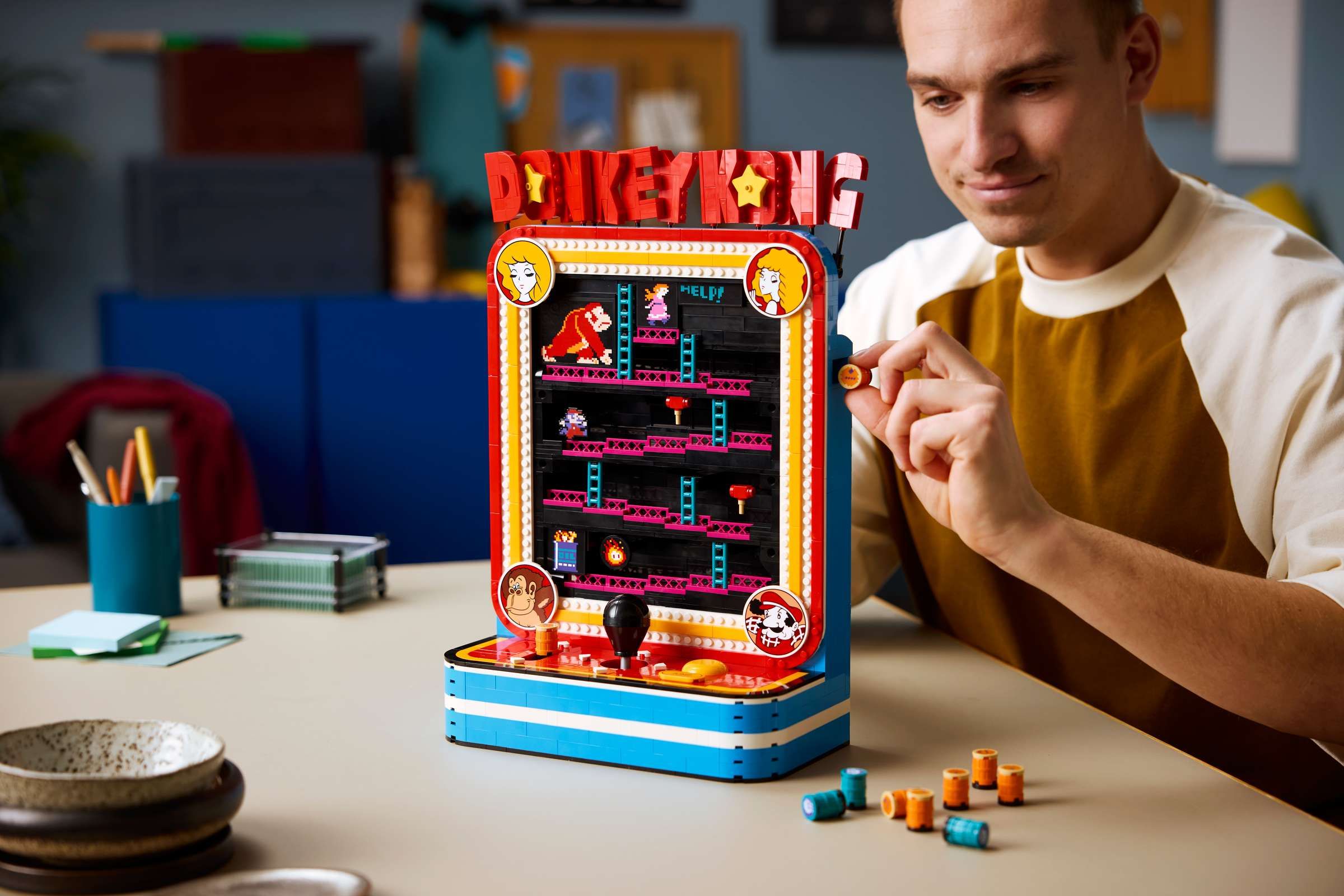
Lego and Nintendo have revealed full details of their Donkey Kong Arcade Lego set, following an earlier teaser. Based on the original 1981 Donkey Kong arcade game, the build recreates the game's first level and includes figures of Jumpman (Mario), Donkey Kong and Lady (Pauline), continuing a partnership that has already produced numerous well-received Nintendo-themed sets.
The set, officially named the Lego Super Mario Donkey Kong Arcade (72051), contains 1,367 pieces, including 21 rolling barrels, and includes interactive features such as a lever that releases barrels and a joystick that lets Jumpman move and jump. It measures 39cm high, 27cm wide and 15cm deep, costs $199.99, and is available for pre-order now ahead of its 1 August release. To promote the launch, Lego and Nintendo enlisted professional Donkey Kong player Steve Wiebe, of The King of Kong fame, to front a promotional teaser video.
In short
- Lego reveals Donkey Kong Arcade set with 1,367 pieces and interactive barrels
- Costs $199.99, releasing 1 August, pre-orders open now
- Part of Lego and Nintendo's growing, popular collaboration series
Explained simply
Donkey Kong is a 1981 arcade game that introduced the character who would become Mario, one of gaming's most iconic figures. The game features Jumpman attempting to rescue his girlfriend from a giant ape, and became a landmark title in video game history. It remains culturally significant and is often credited with establishing the video game industry as a mainstream medium.
Lego and Nintendo have been collaborating to create building sets based on Nintendo's most famous franchises. These partnerships appeal to collectors and fans who want physical, interactive toys centred on beloved video games, whilst allowing both companies to extend their reach into new markets. Previous collaborations have proven popular with audiences.
Recreating the original Donkey Kong arcade level in Lego form appeals to both nostalgic players who remember the original cabinets and new audiences discovering the game through modern media. The set represents an intersection of retro gaming culture and contemporary collectable toys, bridging generational interests in video game history.