World news and discussion on TalkFuse.
The Zarabanda Variations review – free jazz project is a thrillingly original dive into colonial history
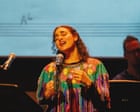
Keir GoGwilt’s *The Zarabanda Variations* is reviewed as an ambitious and highly original collaborative album that re-examines the colonial Latin American roots of the sarabande, before the dance became associated with European baroque composers. Its fusion of free jazz, baroque strings, percussion and spoken-word poetry creates a challenging but compelling alternative to familiar classical interpretations, using the dance’s history to produce something distinctly new.
The 10-piece ensemble includes singer Mariana Flores Bucio and poet Edgar Garcia, whose interludes add historical and literary texture, though sometimes obscurely. Highlights include the riotous jazz-guitar-led *Matachín*, the Mexican-influenced *Otra Llorona*, and *Tonada Americana*, which blends a 17th-century Hispanic dance rhythm with frenetic atonal violin; the reviewer praises the musicianship and scope despite the album’s difficulty.
In short
- GoGwilt reimagines the sarabande through colonial Latin American history.
- Free jazz and baroque elements create a demanding, original album.
- Virtuosic performances outweigh occasionally opaque spoken-word passages.
Explained simply
The sarabande is a dance form with origins in colonial Latin America that was later adopted and transformed by European baroque composers, becoming familiar to classical music audiences through works by Bach and others. For centuries, this colonial history has been obscured as the sarabande became associated primarily with European baroque tradition.
The Zarabanda Variations is a collaborative musical project that attempts to recover and reimagine the sarabande's colonial roots through experimental free jazz rather than traditional classical forms. The project brings together a 10-piece ensemble of musicians and poets who use baroque instruments, improvisation, and spoken-word elements to explore the dance's original context.
The project draws attention to the gap between the sarabande's origins and how it is typically understood today. By returning to the colonial Latin American context of the dance, the project raises questions about how cultural forms migrate and transform across different societies and time periods.
Americas Culture Entertainment Europe Fashion Music World