World news and discussion on TalkFuse.
Robot snakes searched for Venezuela earthquake survivors in collapsed buildings
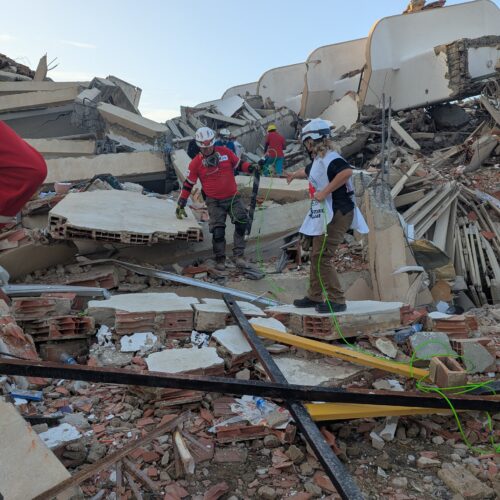
Robot “snakebots” from Carnegie Mellon University were deployed to Venezuela after two earthquakes on 24 June killed more than 5,000 people and injured 16,740. Their ability to move through narrow gaps in collapsed buildings gave rescuers a way to inspect dangerous areas beyond the reach of people and larger equipment.
Each four-foot modular robot carries a camera and is operated with a game controller and tethered laptop, while software coordinates its movements. The team had previously used similar robots after Mexico City’s 2017 earthquake; after being contacted by Venezuelan native Beatriz Gonzalez, researchers rapidly prepared three robots and travelled via Miami to assist despite difficulties arranging a flight.
In short
- Snake robots helped search Venezuela’s earthquake rubble.
- They reached confined areas unsafe for rescuers.
- The team deployed three robots within days.
Explained simply
Two powerful earthquakes struck Venezuela on 24 June 2026, killing more than 5,000 people and injuring 16,740. Many people remained trapped beneath collapsed buildings across the country following the tremors.
Robot snakes, or "snakebots", are specialised machines designed to search through confined spaces and debris that would be too dangerous for human rescuers. Each roughly four-foot-long robot carries a camera and can be controlled remotely, allowing operators to inspect collapsed structures from a safe distance and locate survivors.
These robots were developed by researchers at Carnegie Mellon University, an American research institution that has previously deployed similar technology in earthquake rescue operations, including after the 2017 Mexico City earthquake. Their ability to navigate narrow gaps in collapsed rubble makes snakebots valuable for search and rescue when human teams and larger equipment cannot safely access affected areas.
Americas Art Culture Research Science World