IOC says Infantino complaint outside its scope
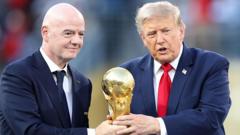
The International Olympic Committee has said it will not investigate Fifa president Gianni Infantino over claims that he breached political-neutrality rules, judging the complaint to be outside its ethics commission’s remit. The case has drawn attention because US President Donald Trump said he contacted Infantino during the World Cup about Folarin Balogun’s red card, after which the player’s ban was suspended.
FairSquare argued that Infantino’s apparent support for Trump conflicted with the Olympic Charter, which bars IOC members from accepting outside instructions affecting their actions or votes. Balogun’s automatic one-match suspension was deferred for 12 months without a stated reason beyond a relevant rule, allowing him to play in the United States’ 4-1 last-16 defeat by Belgium; Norway’s football federation is considering a separate complaint to Fifa.
- IOC says the Infantino complaint falls outside its ethics remit.
- Trump contacted Infantino over Balogun’s World Cup red card.
- Norway may complain to Fifa over the suspended ban.
New here? Start with this
Gianni Infantino is the president of Fifa, the international governing body of football. He is also a member of the International Olympic Committee, which oversees the Olympic Games and requires its members to maintain political independence and neutrality.
A complaint was filed against Infantino by FairSquare, an organisation focused on workers' rights, following the 2026 World Cup. It alleged that Infantino had breached the Olympic ethics code by appearing to support US President Donald Trump, who claimed to have contacted him about footballer Folarin Balogun's red card; Balogun's automatic suspension was deferred rather than enforced, allowing the player to continue playing.
The Olympic ethics code exists because the Games are meant to be above politics, and members are expected to make decisions independently. The complaint centred on whether Infantino had allowed a political figure to influence a professional football decision, which would contradict the principle of independence that the IOC demands from its members.
Both sides, in good faith
The strongest fair case each way — we don't pick a winner.
The case for
The IOC should investigate because Infantino is an IOC member bound by the Olympic Charter's explicit prohibition against accepting outside instructions affecting his actions or votes. If Trump's contact resulted in the suspension being deferred, this constitutes a direct breach of the Charter's political-neutrality rules, and the IOC must investigate to uphold its own governance standards and institutional credibility.
The case against
The IOC's decision reflects a legitimate jurisdictional boundary: Infantino's actions regarding Balogun's suspension fell within his role as FIFA president, not his Olympic duties. The IOC ethics commission's remit properly covers Olympic matters and IOC member conduct in that capacity; extending jurisdiction over all professional activities of IOC members across different organisations would create institutional confusion and infringe on FIFA's domain.