World news and discussion on TalkFuse.
Wildfire forces evacuation of NASA’s Deep Space Network complex in Spain
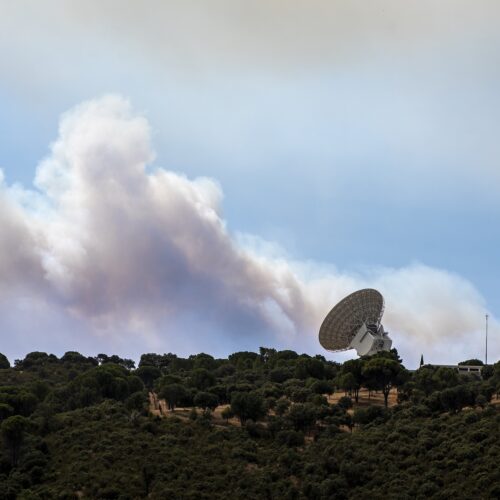
A fast-moving wildfire near Madrid forced NASA to evacuate its Deep Space Network complex in Spain and suspend operations there temporarily. The site is a key part of the global network that communicates with more than 40 missions, including Artemis, the James Webb Space Telescope and the Voyager probes, although NASA said support had been transferred to its California facility without interruption.
The Madrid station, about 65km west of the city centre, includes a 70-metre radio dish and smaller 34-metre antennas; any damage will be assessed once it is safe. More than 19,000 people were reportedly evacuated from nearby mountain towns, with over 2,000 personnel and 10 aircraft fighting the fires amid heatwave and drought conditions; a nearby ESA and Spanish tracking station was also evacuated. The disruption further strains the network because California’s own 70-metre antenna has been offline since last year after an accident.
In short
- Wildfire shut NASA’s Madrid tracking station temporarily.
- Spacecraft communications were transferred to California.
- Spain’s heatwave and drought are worsening fire risks.
Explained simply
NASA operates a global network of large radio antennas called the Deep Space Network that maintains communication with spacecraft and probes exploring the solar system and beyond. The antennas are spread across different continents to ensure Earth can contact these missions at any time as the planet rotates. The network supports over 40 active missions, including the Artemis programme to return humans to the Moon, the James Webb Space Telescope and the Voyager probes sent into space decades ago.
One of the network's most important stations is located near Madrid in Spain, equipped with a 70-metre radio dish and other antennas that relay vital information to and from these distant missions. A fast-moving wildfire forced NASA to evacuate the site and suspend operations temporarily, though the work was quickly transferred to NASA's California station without losing contact with any missions. Engineers will assess any damage to the equipment once it becomes safe to return.
The evacuation occurred amid a larger emergency in the region, with more than 19,000 people evacuated from nearby towns as thousands of firefighters battled the blaze under extreme heat and drought conditions. The disruption carries added significance because NASA's California station has already had its own 70-metre antenna out of service since last year following an equipment failure. This means the network is currently operating with limited capacity to support the many space missions dependent on constant communication with Earth.