Court messages link D4vd to 14-year-old’s pregnancy and alleged abuse
Developed over time first seen 2 months ago
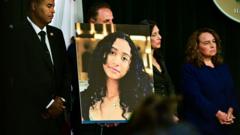
Court messages shown at a Los Angeles hearing link singer D4vd, legally David Anthony Burke, to a pregnancy involving Celeste Rivas Hernandez before the 14-year-old’s death. Prosecutors say the evidence supports allegations that Burke sexually abused and murdered her to prevent disclosure; he has pleaded not guilty, and the hearing is deciding whether the case proceeds to trial.
Prosecutors said iCloud data recovered from Burke’s phone included messages dating from August 2022, when Celeste was 11 and Burke was 17, as well as photographs they say documented abuse. Her body was found in the front boot of Burke’s Tesla in September 2025, and police said DNA from blood at his home and garage matched her; the defence highlighted uncertainty over the time of death and raised the possibility of self-harm. Burke faces seven charges, including murder, continuous sexual abuse of a child and mutilation of remains.
- Court texts form part of the case against singer D4vd.
- Prosecutors allege abuse, murder and concealment of remains.
- Burke denies all charges; a judge is considering trial proceedings.
New here? Start with this
D4vd is the stage name of David Anthony Burke, a singer who has been charged in Los Angeles over the death of Celeste Rivas Hernandez. She was 14 when she died, and prosecutors allege that Burke had abused her over a number of years.
The case centres on messages, phone material and forensic evidence that prosecutors say link Burke to Celeste and support their account of what happened. Burke denies the allegations and has pleaded not guilty, so the claims have not been proved in court.
A preliminary hearing is used to decide whether there is enough evidence for a criminal case to proceed to a full trial. The charges include murder and offences concerning sexual abuse of a child and the handling of human remains.
Both sides, in good faith
The strongest fair case each way — we don't pick a winner.
The case for
Prosecutors’ case is that the messages, alleged pregnancy and abortion history, DNA evidence, and the discovery of Celeste Rivas Hernandez’s remains in Burke’s vehicle form a coherent account of sustained abuse followed by murder to prevent disclosure. They may argue that the timing and apparent pattern of contact give important context to individual pieces of evidence, and that a trial is warranted so the full record can be tested before a jury. This position emphasises protection of children and accountability where evidence suggests serious exploitation and violence.
The case against
The defence’s case is that grave allegations require particularly careful scrutiny, and that the available material may not establish beyond reasonable doubt when, how, or by whom Celeste died. They may argue that messages and DNA require context, that the presence of remains in a vehicle is not by itself a complete explanation of the death, and that prosecutors must prove each charge rather than invite conclusions from a troubling narrative. This position emphasises the presumption of innocence, rigorous evidential standards, and Burke’s right to a fair trial.
More coverage
Read the full article at the source →
Originally published by BBC World as “Texts reveal 14-year-old allegedly murdered by singer D4vd had pregnancy and abortion”.