World news and discussion on TalkFuse.
SpaceX eyes tower catch for next Starship after auspicious end to 13th flight
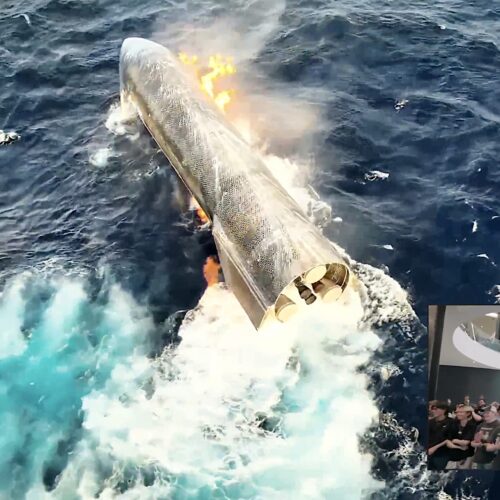
SpaceX’s 13th full-scale Starship test flight ended with the vehicle making an intact, on-target splashdown in the Indian Ocean, where it remained afloat rather than breaking apart or burning. The result matters because it offers SpaceX its clearest opportunity yet to examine how Starship’s heat shield performed during re-entry and could support plans to reuse the spacecraft more rapidly.
After its hour-long flight from South Texas, Starship’s more than 18,000 ceramic heat-shield tiles endured temperatures of up to 1,430°C, while onboard cameras and drones indicated the vehicle and its six Raptor engines were largely undamaged. Elon Musk said SpaceX may attempt to catch Starship with the launch tower’s mechanical arms on its next flight, potentially after a longer trajectory or low-Earth-orbit mission; SpaceX has previously caught the larger Super Heavy booster, but at much lower return speeds.
In short
- Starship completed its first intact, floating ocean splashdown.
- The flight produced valuable heat-shield and re-entry data.
- SpaceX may attempt a tower catch on the next flight.
Explained simply
SpaceX, the aerospace company founded by Elon Musk, is developing a spacecraft called Starship designed to be fully reusable. Unlike earlier spacecraft that were destroyed or heavily damaged after use, SpaceX intends to recover Starship and relaunch it, which would reduce costs and enable more frequent missions.
Starship must survive extreme heat during re-entry from space, with external temperatures reaching over 1,400°C. The spacecraft is protected by thousands of ceramic heat-shield tiles, and examining them after flight is essential to understanding whether the design can withstand repeated use.
SpaceX is testing Starship through a series of flights to develop and refine the spacecraft's design. Each flight provides data that helps the company work towards the goal of recovering and relaunching Starship on future missions.
Americas Celebrity Culture Entertainment Space Technology Travel World