World news and discussion on TalkFuse.
From the strait of Hormuz to the North Sea, a global maritime war rages around us – and more than the price of oil is at stake | Simon Tisdall
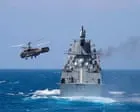
Simon Tisdall argues that a "war of the sea" is spreading globally, driven by the US and Iran's standoff over the strait of Hormuz, and that it threatens the centuries-old principle of free maritime passage that underpins world trade. He notes that although Washington has historically championed the "free sea" doctrine, Donald Trump's administration has taken an inconsistent stance, at one point suggesting the US could itself impose transit tolls, undermining the very norms it claims to defend.
The piece highlights how the Hormuz precedent is already being copied elsewhere: Houthi militias have begun blockading the Bab al-Mandab strait at the mouth of the Red Sea, striking two oil tankers this week, while Indonesia is debating tolls on the strait of Malacca, through which 22% of global shipping passes. Tisdall warns similar disputes could spread to the Bosphorus and Gibraltar, threatening the roughly 80% of world trade by volume that moves by sea, with the article's title also pointing to tensions extending as far as the North Sea.
In short
- Global "war of the sea" is eroding free-passage maritime norms
- Trump's mixed Hormuz stance mirrors Iran's toll claims
- Copycat blockades and toll disputes spreading to key straits worldwide
Steelman: both sides, in good faith
The strongest fair case each way — we don't pick a winner.
The case for
Maritime passages are facing unprecedented coordinated and cascading disruptions by state and non-state actors, with key chokepoints like Hormuz, Bab al-Mandab, and Malacca now actively contested. The concerning dynamic is that weak enforcement of free-passage norms—particularly when major powers like the US appear inconsistent—emboldens further violations. With 80% of world trade dependent on these routes, the cumulative systemic risk is substantial: if disruptions spread to additional straits as described, they could collectively threaten the international order that underpins global commerce.
The case against
Current maritime disruptions, whilst real and concerning, remain localized and manageable rather than constituting a war threatening world trade fundamentals. These incidents are neither unprecedented in scale nor immune to existing solutions: insurance, rerouting, naval protection, and diplomatic pressure have proven effective. The historical record shows maritime commerce withstands such challenges; most nations continue respecting the free-passage principle despite recent tensions. Describing these incidents as an unravelling of centuries-old norms may overstate the threat, conflating temporary political disruptions with systemic failure to the international order.
Explained simply
Several of the world's most important shipping routes are being disrupted by state and non-state actors seeking to control passage through them. This undermines the longstanding international principle of free maritime passage – the idea that all nations have the right to move goods and ships through international waters without obstruction or charges.
The strait of Hormuz, between Iran and Oman, sits at the centre of this dispute. The Trump administration has confronted Iranian attempts to control this route, but has also suggested the US might impose tolls itself, contradicting the very principle it claims to defend. This approach is now being copied: Houthi militias in Yemen are blockading the strait of Bab al-Mandab further south, whilst Indonesia is considering toll systems for the strait of Malacca.
Around 80 per cent of world trade travels by sea, much of it passing through just a handful of narrow straits and waterways. If tolls, blockades or military control spread across multiple chokepoints – such as the Bosphorus between Turkey and Russia, or the strait of Gibraltar – it could disrupt global commerce and drive up prices for consumers worldwide.
Americas Business Elections Middle East Politics World