Trump intensifies push for GOP senators to end filibuster ‘before it is too late’
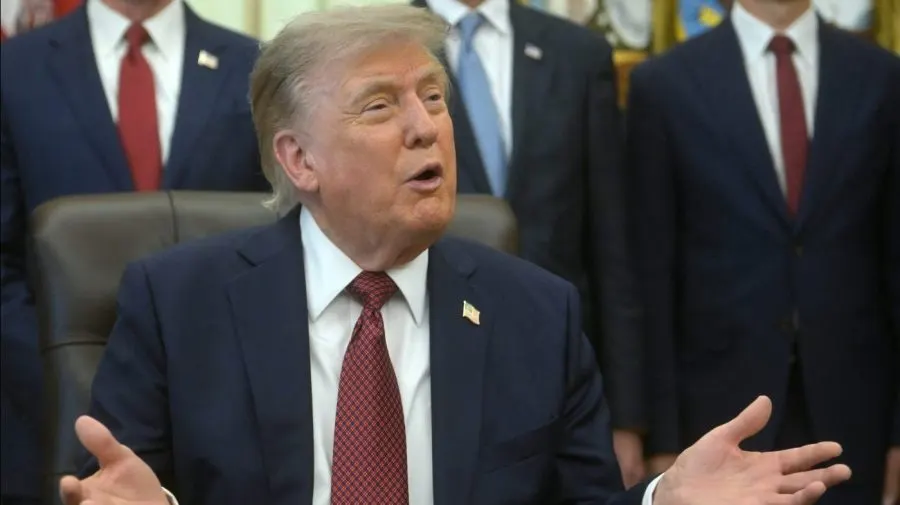
President Trump renewed his call for Republican senators to abolish the legislative filibuster, arguing they should act “before it is too late”. The move would lower the barrier for passing much of his agenda without Democratic support, but it also heightens a long-running dispute within the Senate Republican conference over changing its rules.
Trump’s immediate focus is the SAVE America Act, a voting bill that would require proof of citizenship for voter registration and identification at the polls, alongside other Republican priorities. The filibuster effectively requires 60 votes to advance most Senate legislation, while Republicans hold a 53–47 majority; Senate Majority Leader John Thune and other Republicans have said there are not enough votes to remove it. Supporters say ending the rule would prevent Democratic obstruction, while opponents warn it could allow future Democratic majorities to pass legislation more easily.
In short
- Trump wants Senate Republicans to abolish the filibuster.
- His priority is passing a voting bill without Democratic support.
- Republican senators remain divided and lack the votes.
Steelman: both sides, in good faith
The strongest fair case each way — we don't pick a winner.
The case for
Supporters of filibuster abolition argue that voters elect Senate majorities to deliver their agenda, and the rule enables obstruction rather than governance. They contend that requiring supermajorities is inherently undemocratic, that parties should be accountable to voters for their legislative record, and that a 50-vote threshold with vice-presidential tiebreaker represents a fair, functional majority that encourages legislative action over partisan gridlock.
The case against
Opponents warn that removing the filibuster risks a destructive race to the bottom as future Democratic majorities would easily pass legislation conservatives oppose, making the short-term partisan advantage outweighed by long-term institutional damage. They argue the filibuster protects minority rights against tyranny of the majority, encourages bipartisanship and negotiation, and that the Senate's deliberative function requiring broader consensus is a constitutional feature designed to prevent concentrated power and hasty legislation.
Explained simply
The filibuster is a Senate rule that allows any senator to block legislation through extended debate. It effectively requires 60 votes to advance most bills, rather than a simple majority of 51. With Republicans holding 53 Senate seats, the filibuster prevents them from passing legislation without some Democratic support.
President Trump is urging Republican senators to abolish the filibuster so that Republicans can pass their agenda with their 53-vote majority alone. His immediate focus is voting legislation that would require proof of citizenship for voter registration and identification at the polls. Republicans backing this argue it would prevent Democrats from obstructing their legislative priorities.
However, several Republican senators oppose abolishing the filibuster, with Senate Majority Leader John Thune stating there are insufficient votes to remove it. Opponents worry that eliminating this rule could allow future Democratic majorities to pass bills far more easily once Republicans are back in the minority. The disagreement reflects a long-running tension within the Republican conference about whether Senate rules should be changed.
Geopolitics Government Politics