Thune faces mounting Trump reconciliation pressure heading into summer sprint
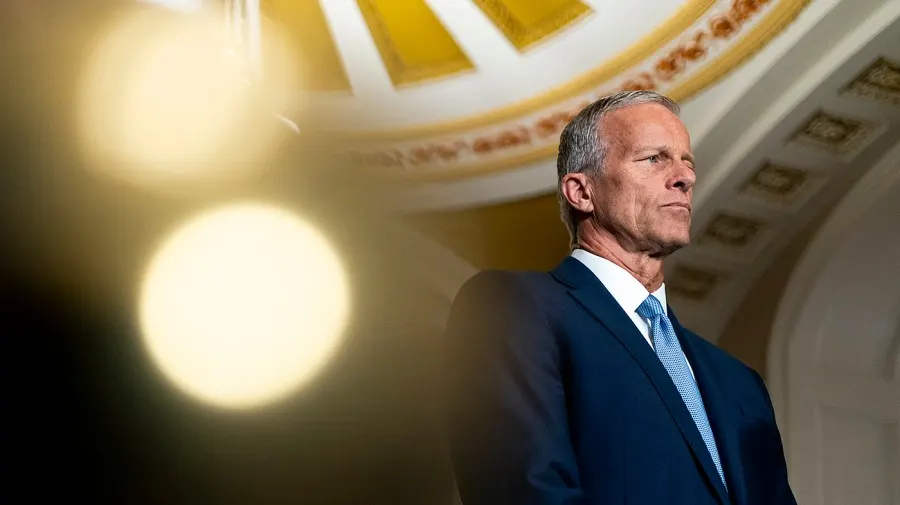
Senate Majority Leader John Thune faces mounting pressure from President Trump and competing Republican factions as he tries to steer a government funding bill and a third reconciliation package through the chamber before its August recess. The clash centres on differing priorities: Thune wants to secure government funding first to avert an October shutdown, while Trump is pushing for the Senate to advance a $95 billion House-passed reconciliation framework, complicating what was already a tight legislative calendar ahead of the midterm elections.
The reconciliation package includes $73 billion for the Pentagon and intelligence agencies, $12 billion for farmers and $10 billion for election-related reforms, the latter tied to Trump's priority Safeguard American Voter Eligibility (SAVE America) Act, which has repeatedly stalled in the Senate. Thune says the budget resolution underpinning the bill lacks the 50 votes needed to pass, while retiring Republican Senator Thom Tillis has vowed to obstruct any bill carrying the SAVE America Act. Thune is instead pursuing a bipartisan stopgap funding measure with Democrats to fund the government through early December, keeping the reconciliation route as a fallback should that effort fail.
In short
- Thune juggles Trump pressure and GOP infighting before August recess
- Trump wants $95bn reconciliation bill prioritised over funding bill
- Thune seeks bipartisan stopgap funding as backup plan instead
Steelman: both sides, in good faith
The strongest fair case each way — we don't pick a winner.
The case for
The House has already passed a $95 billion reconciliation package addressing critical defence, agricultural, and election integrity priorities. Using the reconciliation process now, whilst momentum and alignment exist, represents efficient legislative action on the President's agenda. Delaying these priorities indefinitely in pursuit of always-available funding negotiations risks losing political opportunity for items the administration deems important.
The case against
A government shutdown in October would cause immediate, measurable harm to public services and economic stability. Securing bipartisan funding agreement first represents responsible fiscal stewardship—protecting essential government operations from unnecessary crisis risk before attempting more contentious legislative measures that currently lack sufficient support. Once funding is secured, full legislative capacity can focus on reconciliation where additional effort might build the votes needed.
Explained simply
Reconciliation is a legislative process that allows the Senate to pass certain spending bills with a simple majority (51 votes) rather than the usual 60 votes needed. The current $95 billion package includes funding for defence, agriculture and election-related measures, with particular emphasis on an election integrity bill known as the SAVE America Act.
The federal government's funding expires in October, at which point a shutdown occurs unless Congress passes a new funding bill. Senate Majority Leader John Thune is tasked with steering both the reconciliation package and a separate government funding measure through the chamber before the August recess.
Republicans are divided on several fronts: on which bill should advance first, and on specific provisions within the reconciliation package. Some Republicans oppose the SAVE America Act, complicating efforts to pass the bill as currently written. These disagreements, combined with the tight legislative calendar before midterm elections, create significant challenges for party leadership.