Culture news and discussion on TalkFuse.
A Dairy Story review – giving cows and calves a happier life through progressive farming
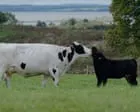
This review covers A Dairy Story, a Scottish documentary about Rainton Farm in Dumfries and Galloway, where owners David and Wilma Finlay pioneer "cow-and-calf" dairy farming by letting calves stay with their mothers for five to six months rather than separating them shortly after birth. The film argues that this progressive approach, believed to be the first attempt at commercial scale in Europe, can improve animal welfare and reduce the environmental strain caused by conventional intensive dairy practices, even as it challenges long-standing industry orthodoxy and initial scepticism from neighbouring farmers.
The documentary, directed by Ian Findlay, notes that cows were initially stressed by the 2012 pilot's change in routine and milk yields dropped, but later trials saw a 25% yield increase as the animals adjusted and extra suckling boosted production. Shot with drone footage of pastures and calves, the film is described as somewhat repetitive and light on economic detail, acknowledging that the farm's finances remain a work in progress, but is praised as a quiet challenge to industrial agriculture and a fitting tribute to Wilma Finlay, who died last year from lung cancer.
In short
- Documentary profiles Rainton Farm's cow-and-calf dairy farming method in Scotland
- Delaying calf separation raised welfare and eventually boosted milk yields by 25%
- Film serves as tribute to co-founder Wilma Finlay, who died last year
Steelman: both sides, in good faith
The strongest fair case each way — we don't pick a winner.
The case for
The cow-and-calf farming model prioritises animal welfare by enabling natural maternal bonding and reducing stress for both mothers and calves, whilst the documented 25% yield increase demonstrates that such systems can achieve economic viability once animals adapt. The approach offers additional environmental benefits by reducing the resource intensity of intensive dairy farming. Supporters contend that initial financial challenges represent transition costs, and that agriculture should evolve toward practices respecting both animals and ecosystems.
The case against
Established dairy farming practices have been refined over decades to achieve productivity and economic viability that sustains rural communities and food affordability. Early separation of calves, though challenging, prevents prolonged separation stress and optimises milking efficiency. The reviewed farm's initial yield drops and ongoing financial uncertainty illustrate real economic risks of fundamental system changes for family farms already operating on thin margins, suggesting that wholesale adoption of experimental methods could destabilise agricultural livelihoods without guaranteed long-term success.
Explained simply
A Dairy Story is a Scottish documentary about Rainton Farm in Dumfries and Galloway, where farmers David and Wilma Finlay have tested an alternative approach to dairy farming. Rather than separating calves from their mothers shortly after birth, as is standard practice, the farm allows them to remain together for five to six months. This method is believed to be the first commercial-scale attempt in Europe and aims to improve animal welfare whilst reducing environmental impact.
The Finlays' approach represents a significant challenge to conventional dairy farming practices. When they introduced the system in 2012, milk yields initially dropped as the cows adjusted to the change, but they later reported a 25 per cent increase in production. The experiment shows that alternative farming methods may be viable at commercial scale, though their broader feasibility and profitability remain questions.
The documentary, directed by Ian Findlay, documents this farming experiment and puts animal welfare and environmental sustainability at the centre of the story. In doing so, it contrasts with the productivity-focused methods that dominate much of modern farming. The film also serves as a tribute to Wilma Finlay, who died from lung cancer last year.
Culture Entertainment Environment Film Science