World news and discussion on TalkFuse.
How ‘fire-generated thunderstorms’ make wildfires more deadly
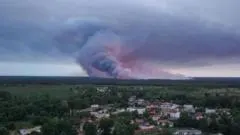
Tens of thousands of people have been evacuated from the Gironde region around Bordeaux as firefighters battle wildfires that have generated an unprecedented "pyrocumulonimbus" cloud in France. These "fire-generated thunderstorms" form when intense heat from a blaze forces air to rise rapidly, carrying smoke, ash and water vapour high into the atmosphere, where it cools and condenses into a towering thundercloud; this creates turbulent winds that scatter embers unpredictably and can trigger lightning strikes that spark new fires, making the blazes far harder to control.
French authorities say the phenomenon has never previously been recorded in the country, and warn the Gironde fire could burn for weeks and take months to fully extinguish, with another heatwave of up to 40C forecast this week. Scientists note such clouds are more likely amid high temperatures, strong winds and low moisture, and expect climate change to make them more frequent, pointing to precedents including Australia's 2019-2020 Black Summer bushfires, which killed at least 33 people and burnt over 11 million hectares, and major fires in California in 2021.
In short
- French wildfires near Bordeaux create rare, unprecedented "fire-generated thunderstorm" clouds
- Pyrocumulonimbus clouds spread embers and lightning, worsening wildfire spread
- Scientists warn climate change will make such extreme fire events more common
Explained simply
A fire-generated thunderstorm, or pyrocumulonimbus cloud, forms when the intense heat from a large wildfire forces air to rise rapidly into the atmosphere, carrying smoke, ash and water vapour upwards. As this air rises and cools, the moisture condenses into a massive thundercloud that towers high above the original blaze.
These clouds significantly increase the danger posed by wildfires. The turbulent winds scatter burning embers across a wide area, potentially starting new fires far from the original blaze, whilst lightning strikes from the cloud can ignite additional blazes. This unpredictable spread makes the original fire considerably harder to contain.
Such clouds require specific atmospheric conditions: high temperatures, strong winds and low moisture levels. Climate change is making these conditions more common, so scientists expect fire-generated thunderstorms to become more frequent in the future. Similar clouds have been observed during major wildfires in Australia in 2019 and 2020 and in California in 2021, both of which caused significant loss of life and destroyed vast areas of land.
Americas Science Space Technology World