World news and discussion on TalkFuse.
Tariffs are Trump’s favorite plaything – and his justifications are absurd | Steven Greenhouse
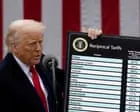
In this opinion piece, journalist Steven Greenhouse argues that Donald Trump's renewed use of tariffs is a politically motivated distraction from mounting troubles, including a faltering conflict with Iran, sliding approval ratings and rising inflation. He contends the president's justifications for the levies, including citing forced labour, are flimsy pretexts, and warns that the tariffs will primarily hurt ordinary Americans through higher prices rather than achieve their stated economic aims.
The piece cites a 50% tariff imposed on many Canadian goods and blanket 10–12.5% tariffs applied to more than 80 other countries, timed to coincide with the expiry of an earlier tariff round. The Yale Budget Lab estimates the measures will cost the average US household an extra $1,100 a year, while the US has reportedly lost 75,000 factory jobs since Trump returned to office, undermining his claim that tariffs boost domestic manufacturing. Greenhouse notes this follows the Supreme Court's rejection of Trump's broader tariff powers in February, framing the new measures as an attempt to find alternative legal justifications for a policy he is reluctant to abandon.
In short
- Opinion piece criticises Trump's new tariffs as politically driven and economically harmful
- 50% Canada tariff and 10–12.5% levies on 80+ countries imposed
- Estimated to cost US households $1,100 annually amid factory job losses
Steelman: both sides, in good faith
The strongest fair case each way — we don't pick a winner.
The case for
Proponents of strategic tariffs argue they address genuine unfair trade practices including intellectual property theft, currency manipulation, and artificially suppressed labour costs in competitor nations, whilst protecting domestic manufacturing capacity essential for national security and economic resilience. They contend that temporary price increases justify rebalancing trade relationships that have systematically disadvantaged American workers, and that tariffs provide necessary leverage for negotiating fairer long-term agreements.
The case against
Critics contend that tariffs function primarily as regressive taxation on ordinary consumers, raising prices and inflation without delivering promised manufacturing gains, with job losses mounting despite their implementation. They argue the policy represents political opportunism rather than sound economics, imposing immediate burdens on working families whilst failing to achieve stated objectives and risking retaliatory tariffs from trading partners that further damage the broader economy.
Explained simply
Tariffs are taxes imposed on imported goods, designed to make foreign products more expensive and encourage people to buy domestically made items instead. Donald Trump has recently imposed new tariffs, including a 50 per cent levy on Canadian goods and 10–12.5 per cent tariffs on imports from more than 80 countries.
These measures have direct financial consequences for households and workers. Economic analysis suggests they could cost the average American household around $1,100 per year through higher consumer prices, whilst the US has lost 75,000 factory jobs since Trump returned to office. Supporters argue tariffs protect domestic manufacturing, though critics question whether they achieve this goal.
Trump has long used tariffs as a policy tool, citing various justifications including protection of domestic industry and addressing unfair trade practices. The current round of tariffs follows the Supreme Court's rejection in February of his broader tariff authority, leading him to pursue alternative legal approaches to similar policies.
Americas Business Elections Government Middle East Politics World