Entertainment news and discussion on TalkFuse.
The Best Way To Remake More Final Fantasy Games Is Staring Square Enix In The Face
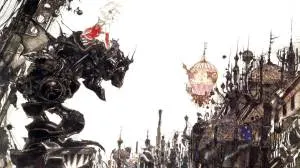
GameSpot argues that Square Enix could remake further Final Fantasy titles more effectively in its HD-2D visual style, rather than following the large-scale, multi-part approach used for Final Fantasy VII Remake. The suggestion matters because fans are already discussing possible remakes after the VII trilogy concludes, while the publisher must balance nostalgia, production scale and development time.
Final Fantasy XIV producer Naoki Yoshida said remaking games such as Final Fantasy VI could require four or five instalments because of their size and complexity; VIII and IX were also mentioned as popular candidates. The article contends that HD-2D, used in titles such as Octopath Traveler and Dragon Quest III HD-2D Remake, could preserve VI’s original character while making development more manageable. Dragon Quest III HD-2D Remake producer Masaaki Hayasaka has said Final Fantasy VI would be his preferred next HD-2D project.
In short
- HD-2D is proposed as a practical route for future Final Fantasy remakes.
- Yoshida says large remakes could need four or five instalments.
- Final Fantasy VI is highlighted as the strongest candidate.
Steelman: both sides, in good faith
The strongest fair case each way — we don't pick a winner.
The case for
The HD-2D approach represents an elegant solution that honours the original character of classic Final Fantasy titles whilst substantially reducing development time and resources. Octopath Traveler and Dragon Quest III HD-2D Remake have proven commercial and critical viability for this style, enabling Square Enix to deliver multiple beloved remakes rather than committing half-decade development cycles to single titles. This strategy ultimately serves the fanbase more comprehensively by producing more remakes sooner without compromising artistic integrity.
The case against
Final Fantasy VII Remake's critical and commercial triumph demonstrates that fans eagerly embrace fully realised, large-scale reimaginings with contemporary cinematic presentation and expanded narratives rather than retro-styled interpretations. The significant investment in visual spectacle and storytelling depth produces culturally distinctive experiences that genuinely leverage modern technology rather than deliberately constrain aesthetics through stylistic reverence. For a franchise of Final Fantasy's prestige, ambitious comprehensive reimagining often yields superior artistic and commercial outcomes than efficient, faithful updates.
Explained simply
Square Enix has been remaking classic Final Fantasy games for modern audiences. The company's flagship project is the Final Fantasy VII Remake, which spans multiple large-scale games to be released over several years. As this project approaches completion, discussion has begun about which other earlier Final Fantasy titles might be remade next.
One possible approach would follow the Final Fantasy VII model, where a single original game is expanded into multiple separate releases. Naoki Yoshida, a producer at Square Enix, has stated that this method would likely require four or five separate instalments for a game such as Final Fantasy VI, given its size and complexity.
An alternative method uses "HD-2D", a visual style that updates pixel-based graphics to modern standards whilst preserving the original game's core design. This approach has been used in games such as Octopath Traveler and the recent Dragon Quest III remake. The producer of the Dragon Quest III HD-2D remake has indicated that Final Fantasy VI would be his preferred project for this style of remake.
Celebrity Entertainment Gaming