House map roughly as favorable to GOP as 2018’s, despite redistricting: Analysis
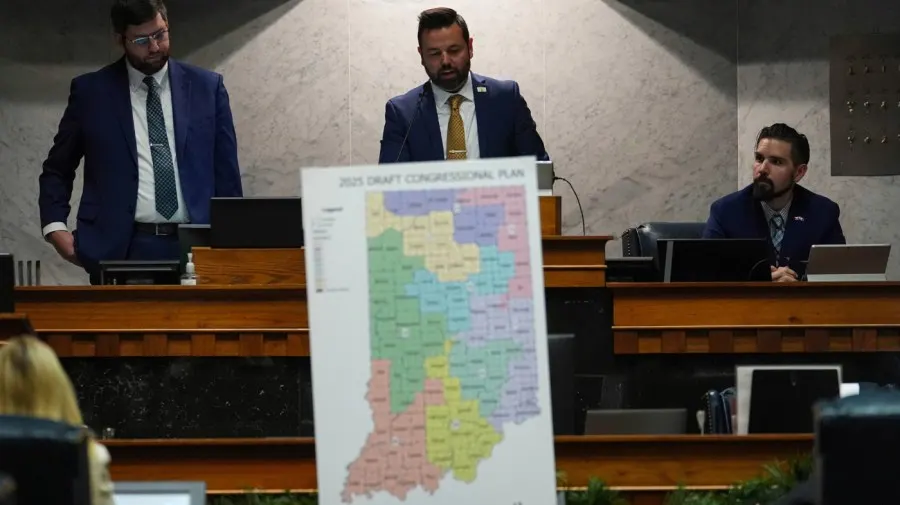
The article text was unavailable because access to the page was denied, so its contents cannot be summarised reliably. The headline indicates an analysis comparing the Republican Party’s House electoral map with that of 2018, including the effects of redistricting.
No supporting details, figures or methodology were provided in the accessible text. A neutral summary would require the article’s full text or an alternative accessible source.
In short
- Article content was inaccessible.
- Headline compares GOP House maps.
- No reliable details were available.
Explained simply
Redistricting is the redrawing of electoral district boundaries that happens every ten years after the national census in the United States. These changes significantly affect election outcomes because they determine which voters are grouped together in each district, and political parties often try to draw maps to advantage their own candidates. How boundaries are redrawn has become increasingly important and contested in American politics.
The 2018 midterm elections served as a key moment for measuring whether electoral maps favour Republicans or Democrats. Analysts use 2018 as a benchmark because it represents a particular balance of voter support across the country at that time and offers a clear basis for comparison with current electoral prospects.
An analysis suggests that despite recent redistricting efforts, the House electoral map is currently about as advantageous to the Republican Party as it was in 2018. This finding indicates that redistricting changes have not substantially altered the underlying electoral landscape for either party relative to that historical comparison point.