Science news and discussion on TalkFuse.
Criticism over planned solar panels on greenfield site
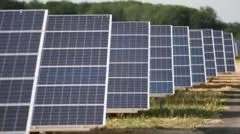
A planning application for 72 ground-mounted solar panels on a greenfield site in St Sampson, Guernsey, has drawn criticism from locals, who argue the agricultural land should be protected and that the panels would be better placed on the applicant's own roof. Opponents cite wildlife concerns, saying the field provides habitat for insects and other creatures, and warn that greenfield sites lost to development cannot be replaced. The applicant disputes the greenfield designation, saying former greenhouses on the land were demolished and buried, leaving it unsuitable for agriculture, and that the panels would supply power to his own house and up to seven neighbouring properties.
Islander Chris Chadwick, who describes himself as a supporter of renewable energy, said covering greenfield land with panels "didn't gel" with him and suggested the applicant's large house roof would be a better location. Simon De La Rue of Little Green Energy countered that rooftop installations face practical obstacles, such as reduced space from dormer windows, which can push up costs without meeting a property's electricity needs; he suggested decisions on greenfield solar sites should be made case by case, alongside strong biodiversity planting policies. No decision date has yet been set for the application.
In short
- Guernsey solar plan for 72 panels on greenfield site sparks backlash.
- Critics favour rooftop panels; applicant disputes greenfield status.
- Renewable energy firm says case-by-case decisions needed; no ruling yet.
Steelman: both sides, in good faith
The strongest fair case each way — we don't pick a winner.
The case for
Renewable energy deployment is essential for climate goals, and this site's history as demolished greenhouses renders it unsuitable for agriculture, making it pragmatic for solar use rather than leaving it abandoned. Rooftop installations face genuine practical constraints—dormer windows, space limitations, and cost inefficiencies that can prevent them from meeting energy needs entirely. Paired with strong biodiversity protections, ground-mounted solar on already-compromised land represents a reasonable environmental trade-off in service of decarbonisation.
The case against
Greenfield land is irreplaceable once developed, and this site retains ecological value as wildlife habitat and working landscape worthy of protection. Rather than converting open land to solar arrays, the applicant should exhaust all realistic rooftop options first; the burden of proof should rest with demonstrating genuine necessity before industrial development is permitted, regardless of how environmentally beneficial it claims to be. Allowing such conversions sets a troubling precedent for piecemeal erosion of protected land.
Explained simply
A property owner in Guernsey has applied for permission to install solar panels on greenfield land—undeveloped agricultural ground that has never been built on. The proposal has sparked a local debate about how to balance renewable energy needs against protecting farmland and wildlife habitats. Greenfield sites are considered particularly valuable because once lost to development, they cannot be replaced.
Local residents and environmental supporters argue the panels should instead be installed on the applicant's roof, which they say is large enough for the purpose. The applicant counters that the land is no longer suitable for farming because old greenhouses were demolished and buried there, and that rooftop installation alone would not generate enough power for his needs or those of neighbouring properties he plans to supply with electricity.
This reflects a broader tension in environmental policy: renewable energy is widely supported as necessary to tackle climate change, but there is disagreement over where solar installations should be built. Energy experts have noted that rooftop solar faces practical challenges on some properties, though others argue greenfield development should be avoided where alternatives exist. A planning decision has not yet been scheduled.