World news and discussion on TalkFuse.
Signals are grim for Jodrell Bank Observatory after UK science funding decision
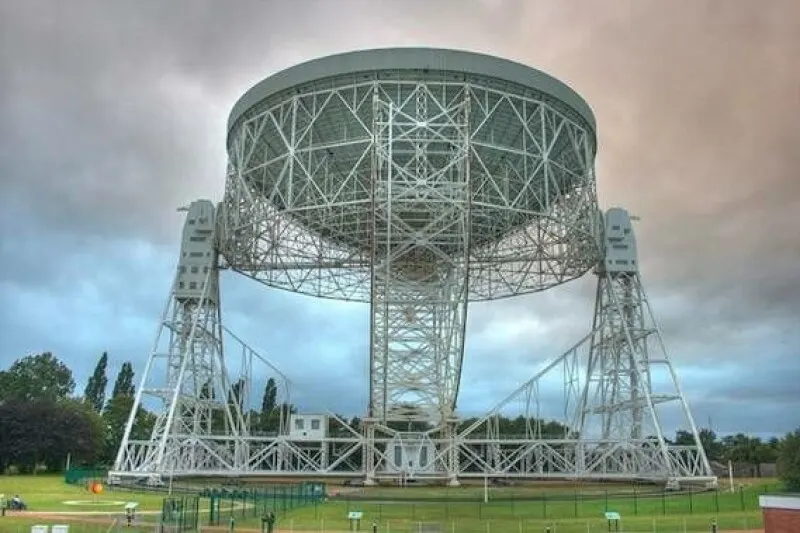
Jodrell Bank Observatory faces a precarious future after UK Research and Innovation (UKRI) cut funding, putting the fate of its e-MERLIN radio telescope array and the iconic Lovell Telescope in doubt beyond 2028. The decision, driven by a 2.7% reduction in the UK's Particle Physics, Astronomy and Nuclear Physics budget alongside rising costs, has alarmed astronomers who warn it threatens a globally significant scientific and cultural institution, with the university and Jodrell Bank now scrambling to find alternative funding to keep the site running.
UKRI's Professor Michele Dougherty said the cuts reflected "tough, but necessary, decisions," while the Royal Astronomical Society's Professor Jim Wild called the move "devastating" for UK astronomy. Other casualties include the withdrawal of UK funding for the James Clerk Maxwell Telescope in Hawaii and a reduced funding offer for the Birmingham Solar Oscillations Network. Physicist Brian Cox blamed the fallout on "bad legacy decisions" by UKRI, compounded by the recent abolition of its sponsoring department, DSIT; the Grade I-listed Lovell Telescope, which turns 70 next year, now risks becoming, in the article's words, "a rusting monument" unless new funding is secured before 2028.
In short
- UKRI funding cuts threaten Jodrell Bank's e-MERLIN telescope array beyond 2028
- Astronomers and Brian Cox call the decision devastating and poorly handled
- Historic Lovell Telescope's future now depends on finding alternative funding
Steelman: both sides, in good faith
The strongest fair case each way — we don't pick a winner.
The case for
Proponents of continued funding argue that Jodrell Bank is a world-leading and irreplaceable scientific facility whose loss represents a disproportionate sacrifice for relatively modest budgetary savings. They contend that maintaining such excellence is vital to the UK's scientific standing and soft power, and that cutting a flagship institution is poor strategy when the financial burden relative to overall budgets is minimal.
The case against
Officials defending the cuts argue that the UK's science budget is constrained by fiscal reality and the 2.7% reduction necessitates difficult choices among many competing priorities. They maintain that no facility, however excellent, can be protected indefinitely from budget pressures, and that sustaining financial discipline across the scientific ecosystem is necessary even when individual cuts prove painful.
Explained simply
Jodrell Bank Observatory is one of the UK's most important research facilities, located in Cheshire and home to the famous Lovell Telescope. The telescope has been observing the universe since the 1950s and remains a globally significant scientific institution and cultural landmark.
UK Research and Innovation (UKRI), the government body that funds science research in Britain, has announced cuts to its spending on astronomy and physics. This decision means Jodrell Bank's public funding will end in 2028 unless the observatory can secure alternative sources of money to continue its work.
The loss of funding matters because the Lovell Telescope requires continuous investment to remain operational as it ages. Scientists warn that closing Jodrell Bank would damage Britain's research capabilities, and there are concerns that the historic, listed building could fall into disrepair without ongoing care.