Technology news and discussion on TalkFuse.
Debate over AI’s future divides Silicon Valley as China gains ground
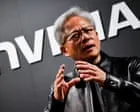
A public debate over the future of artificial intelligence has split leading Silicon Valley figures, reignited by the release of a powerful new Chinese open-source model. Nvidia's Jensen Huang, Microsoft's Satya Nadella and Elon Musk have all publicly backed open-source AI, arguing it strengthens safety, security and innovation, while rivals such as Anthropic and OpenAI warn that freely modifiable models are harder to regulate and could hand China an advantage. The disagreement matters because it is shaping how the US tech industry and government respond to China's rapid AI progress, with billions of dollars and competitive positioning at stake.
Huang's first-ever post on X championed open models, and he shared a Microsoft-led open letter backed by SpaceX, Palantir, Andreessen Horowitz and others calling for wider adoption. Anthropic notably did not sign, having long argued proprietary systems like its Claude chatbot are safer, a view echoed by OpenAI executive Dean Ball, who warned open-sourcing could lead to "full AI communism". The trigger is Kimi K3, a new Chinese open-source model rivalling top US systems, which has unsettled both Silicon Valley and the White House; Treasury Secretary Scott Bessent has accused Chinese labs of stealing US intellectual property and floated sanctions, but the Trump administration remains divided on whether to restrict such models given some American firms already rely on them.
In short
- Tech leaders split publicly over open-source versus proprietary AI models.
- China's Kimi K3 model has alarmed Silicon Valley and Washington.
- Trump administration divided on whether to restrict Chinese AI models.
Steelman: both sides, in good faith
The strongest fair case each way — we don't pick a winner.
The case for
Open-source AI democratises access to transformative technology and prevents monopolistic control by a handful of corporations, which ultimately strengthens both innovation and safety through distributed scrutiny and transparency. When code is public, security vulnerabilities can be identified and patched by thousands of independent researchers rather than hidden within proprietary systems, and the broader ecosystem benefits from rapid iteration and creative applications. This approach reflects fundamental principles of technology's long-term resilience: distributed systems are harder to compromise, and knowledge shared openly creates healthier competition and prevents any single entity from dominating a critical technology.
The case against
Open-source models, once released, cannot be recalled or controlled, and their modification lies entirely beyond the creators' ability to govern, making responsible deployment and safety practices impossible to enforce. Regulatory frameworks designed to manage AI risks depend on clear accountability and the ability to audit systems, both of which become impractical when anyone can fork, modify and redistribute a model for purposes the creators cannot foresee or prevent. In geopolitical competition, especially with actors unconstrained by safety norms, freely available powerful AI systems could disadvantage democracies that respect governance and responsible scaling, handing strategic advantages to nations willing to pursue capability without restraint.
Explained simply
The world's biggest artificial intelligence companies are publicly disagreeing about whether advanced AI systems should be open to modification by anyone or kept under strict company control. Tech leaders including Nvidia's Jensen Huang and Microsoft's Satya Nadella argue that freely available AI models strengthen safety and innovation, whilst others including Anthropic and OpenAI warn that openly modifiable systems are difficult to regulate and could pose security risks.
The companies have different reasons for their positions. Those backing open systems believe that freely available AI is safer because many people can check it for problems and no single company controls it, whereas opponents argue that allowing anyone to modify AI systems makes them harder to keep safe and reliable.
The disagreement has become urgent because China has released a powerful new open-source AI model called Kimi K3 that competes with American systems, raising concerns in Washington and Silicon Valley. American officials have suggested Chinese companies may have stolen US technology, leading to calls for restrictions on such models, although the Trump administration is divided on whether this would actually harm American companies that rely on open-source systems.
AI Art Asia Culture Europe Technology World