Trump administration bans new Chinese humanoid robots
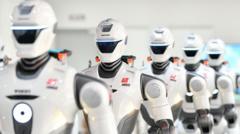
The Trump administration has announced a ban on new imports of foreign-made humanoid robots, a move squarely aimed at Chinese manufacturers who currently dominate the global market for such machines. The restriction, which also covers four-legged robots, was framed as necessary to address "unacceptable risks" to US national security, reflecting the wider technological rivalry between Washington and Beijing over robotics and artificial intelligence.
The Federal Communications Commission, which announced the measure, also banned imports of power inverters used in data centres and solar panels, citing risks to the US economy. FCC chairman Brendan Carr said the action was intended to help secure America's critical supply chains. Chinese firms have moved quickly to develop and market humanoid robots for factories and homes, getting ahead of US competitors such as Elon Musk's Tesla and Boston Dynamics. The BBC has approached the Chinese embassy in Washington for comment.
- US bans new imports of foreign-made humanoid and four-legged robots
- Move targets China, the leading maker of such robots
- FCC also banned power inverter imports over economic risk concerns
Both sides, in good faith
The strongest fair case each way — we don't pick a winner.
The case for
Supporters argue that humanoid robots equipped with cameras, microphones and networked sensors pose genuine espionage and data-security risks if built by firms subject to Chinese state influence, especially as such machines enter homes, offices and factories. They see robotics as a strategic, dual-use technology with military as well as civilian applications, and argue that allowing heavily subsidised Chinese manufacturers to dominate the market could leave America dependent on an adversary for critical future infrastructure. From this view, a targeted ban protects both national security and a nascent domestic industry that needs room to mature without being undercut by state-backed competitors.
The case against
Critics argue that blocking Chinese humanoid robots amounts to protectionism dressed up as security policy, denying American consumers and businesses access to cheaper, more advanced technology and slowing the pace of innovation that competition normally drives. They contend that many security risks can be managed through targeted software audits, data-localisation rules or component restrictions rather than a blanket ban, and that shutting out competitors reduces the pressure on US firms to innovate quickly. There is also concern that such measures invite retaliation, disrupt supply chains that US manufacturers themselves rely on, and could isolate America from a global robotics ecosystem it might otherwise help shape.