Entertainment news and discussion on TalkFuse.
Wilson calls Nolan’s Odyssey film abysmal over horror tone shift
Developed over time first seen 4 months ago
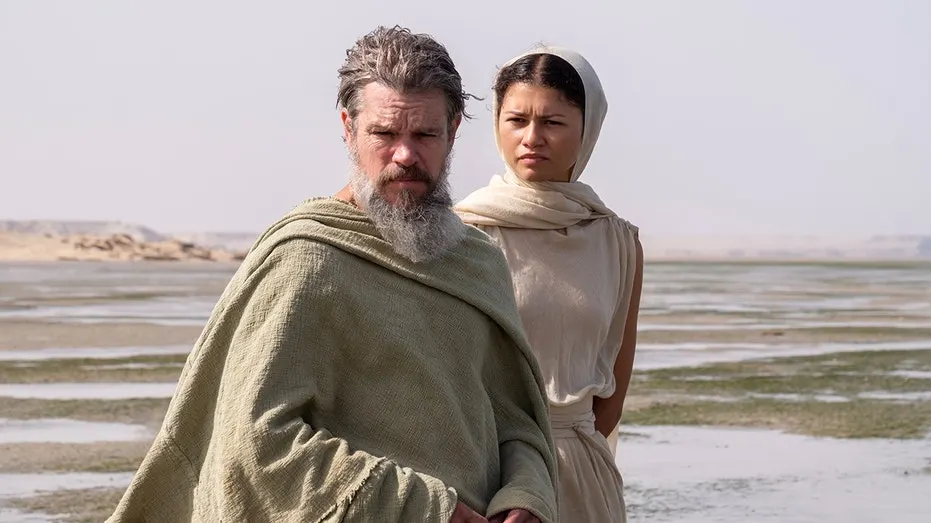
Christopher Nolan's forthcoming film adaptation of Homer's "The Odyssey" attracted sharp criticism from Emily Wilson, the acclaimed classicist and translator of the epic, who branded the work "abysmal" and said she would be ashamed to have made it. Her intervention brought scholarly scrutiny to bear on a high-profile literary adaptation, raising questions about how faithfully Nolan's version handles the source material and the artistic liberties it takes with a canonical text.
Coverage of the film also drew attention to several unsettling, horror-tinged sequences, reflecting Nolan's long-stated ambition to one day direct a horror film. The "Odyssey" adaptation appears to have become an outlet for that interest, with dark, suspenseful visual sequences marking a notable tonal departure from his previous work, adding a further layer to the debate over the film's fidelity to Homer's original.
- Sources
- 2
- Outlets
- 2
- Left · Centre · Right
- 0 · 0 · 1
In short
- Classicist Emily Wilson calls Nolan's Odyssey film "abysmal"
- She says she'd be ashamed to have made it
- Film features horror-style scenes, a tonal shift for Nolan
How this story developed
- 4 months ago Coverage has circled back to pairing Wilson's original rebuke with the horror-toned footage, reinforcing both the fidelity controversy and the sense that Nolan is using the adaptation to indulge his horror ambitions, without introducing any new facts beyond what was already reported.
- 4 months ago Reporting has shifted focus onto the film's darker sequences, framing them less as a mere fidelity issue and more as evidence of Nolan actively expanding into horror-adjacent filmmaking, even as Wilson's "abysmal" verdict continues to shadow the project.
- 4 months ago Emily Wilson, translator of Homer's "Odyssey," has denounced Christopher Nolan's forthcoming film adaptation as "abysmal," saying she would be ashamed to have made it, while separate coverage has spotlighted horror-tinged sequences that reflect Nolan's long-standing wish to direct a horror film.
Steelman: both sides, in good faith
The strongest fair case each way — we don't pick a winner.
The case for
Those sympathetic to Wilson's criticism argue that a scholar who has spent years immersed in the nuance, tone and moral complexity of Homer's text has a legitimate basis for judging whether a high-profile adaptation honours or distorts it. On this view, introducing pervasive horror atmospherics risks flattening a work that is as much about homecoming, hospitality and cunning as it is about peril, and audiences new to the epic may come away with a skewed impression of what the poem actually is. Wilson's willingness to speak bluntly, despite the film's prestige, can be seen as a valuable corrective in a culture where classic texts are often adapted loosely with little scholarly pushback.
The case against
Those defending Nolan's approach argue that film adaptation is a distinct art form, not a translation exercise, and that directors are entitled to reinterpret ancient material through a contemporary lens to make it resonate anew. The Odyssey itself contains genuinely frightening episodes, from the Cyclops to the Underworld, so leaning into dread and suspense can be seen as an act of fidelity to the poem's darker undercurrents rather than a betrayal of them. On this view, a single scholar's strong personal reaction, however well informed, is not the final word on a work's artistic merit, and audiences and critics should judge the finished film on its own terms once released.
Explained simply
Nolan's forthcoming film adaptation of Homer's ancient epic poem "The Odyssey" has been generating attention well before its release, partly because of who is behind it. Christopher Nolan is a director known for big, technically ambitious films, and his take on this classic story of the Greek hero Odysseus's long journey home from war has been closely watched by both film fans and scholars of ancient literature.
The latest debate centres on two threads. One is a strong critical reaction from Emily Wilson, a well-known classicist and translator whose modern rendering of "The Odyssey" text has been widely praised, giving her particular authority to comment on how faithfully the film handles the original story. The other is the film's apparent tone, with reports describing dark, unsettling sequences that mark a shift from Nolan's usual style, tied to his long-stated wish to direct something in the horror genre.
Together these two elements matter because they touch on a broader question familiar whenever a classic text is adapted for the screen: how much creative licence a filmmaker should take with source material that many people hold dear, and whether changes in tone or style serve the story or work against it.
Coverage · 2 sources
Entertainment Film Horror World