FA ‘deeply concerned’ by Fifa plan as Uefa to meet
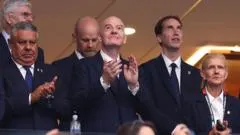
The Football Association has said it is "deeply concerned" about Fifa's plan to sell stakes in its major competitions, including the World Cup, to private investors. Uefa's 55 member nations are set to hold an emergency virtual meeting later this week amid growing anger across the sport, with fears that outside investors could gain too much influence and drive massive expansion of the men's and women's World Cup and Club World Cup.
Fifa's proposal, which emerged in reports from the Financial Times and The Times before being formally released on Tuesday, would create a commercial subsidiary to run its flagship events. It appears at least two of Fifa's eight vice-presidents were not consulted beforehand, and both Uefa and Concacaf have issued strongly worded statements criticising the lack of due process; Uefa said the plans had "crossed a line". Concerns centre partly on the calendar impact, given plans for a 64-team World Cup in 2030 across six host countries and three confederations, at a time when the football schedule is already stretched by expanded European club competitions.
- FA "deeply concerned" over Fifa's plan to sell World Cup competition stakes
- Uefa to hold emergency meeting; boycott talk possible
- Concacaf also condemns lack of consultation and due process
New here? Start with this
FIFA, which governs international football, wants to sell stakes in its major competitions to private investors. This would involve creating a separate business to run tournaments like the World Cup and the Club World Cup.
Football organisations across the world are worried about the proposal. They fear that private investors could gain too much influence over how the tournaments operate, potentially using that power to make the competitions larger to boost profits. Some officials were not even consulted about the plan beforehand, and the lack of discussion has added to the anger.
The football calendar is already busy with matches throughout the year, and these tournaments are already set to expand. The World Cup, for example, is scheduled to grow to 64 teams in 2030. If private investors push to make tournaments even bigger for commercial reasons, it could create serious problems for scheduling and put additional strain on players and teams.
Both sides, in good faith
The strongest fair case each way — we don't pick a winner.
The case for
FIFA's plan represents necessary modernisation to fund football's global growth. The sport generates billions annually but needs sustained investment in infrastructure, technology, and competition expansion to reach underserved markets, particularly in the Global South. Private capital brings expertise and efficiency that purely governmental structures lack, whilst commercial subsidiaries are standard in modern sports governance. The proposed expansion of the World Cup and Club World Cup requires resources that FIFA alone cannot reliably provide whilst maintaining competitive quality and development programmes.
The case against
Ceding ownership stakes in football's most prestigious competitions to private investors fundamentally undermines governance accountability and player welfare protections. When profit becomes the primary driver of competition structure rather than sporting excellence, the calendar expands beyond safe limits, player injury rates climb, and smaller confederations with less commercial appeal become marginalised in favour of lucrative markets. The lack of consultation with UEFA and other major stakeholders before announcing transformative plans violates proper process and reveals how private investment creates misaligned incentives—investors pursue returns whilst football communities pursue sustainable, equitable development. These concerns cannot be adequately addressed through corporate partnership agreements alone.