Science news and discussion on TalkFuse.
Endangered tiger cubs born in conservation boost
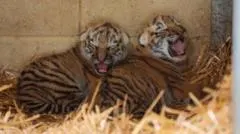
A pair of endangered Amur tiger cubs have been born at Longleat Safari Park in Wiltshire, marking a significant boost for global conservation efforts and prompting keepers to describe the arrival as a "real privilege". The cubs, born to third-time parents Red and Yana, were announced on International Tiger Day, drawing attention to the plight of one of the world's most endangered species, with only an estimated 450 Amur tigers left in the wild.
The two-week-old cubs are currently unnamed as their sex has not yet been determined, and keepers are giving Yana extra food to support her. They will feed from their mother for around six months before weaning onto meat, and will need inoculations before venturing outside for public viewing. Longleat, marking the 60th year of its drive-through safari, is now home to seven tigers, the largest such family group in the UK; Yana and Red's previous litters, born in 2019 and 2024, have included offspring that moved to other collections under the European Endangered Species Programme.
In short
- Two Amur tiger cubs born at Longleat Safari Park, Wiltshire
- Species critically endangered, with only ~450 left in the wild
- Cubs unnamed, sex unknown; will be viewable after inoculations
Steelman: both sides, in good faith
The strongest fair case each way — we don't pick a winner.
The case for
Captive breeding programmes represent vital conservation work, preserving genetic diversity that would otherwise disappear as wild populations decline critically. Through carefully managed international breeding schemes, facilities maintain healthy populations serving as genetic reservoirs whilst raising public awareness and funding for tiger conservation. The cubs born at Longleat contribute to this effort, and their siblings' movement between collections under the European Endangered Species Programme demonstrates how such animals can support broader species recovery.
The case against
Whilst captive breeding has merit, conservationists argue that substantial resources devoted to breeding programmes might more effectively address extinction by protecting and expanding wild tiger habitats where they naturally belong. Legitimate questions remain about whether captive-bred tigers can successfully adapt to life in the wild, whether such programmes genuinely address root causes like habitat loss and poaching, and whether commercial interests in safari parks align with rigorous conservation science. Without solving underlying threats, captive breeding risks becoming a substitute for rather than complement to real habitat protection.
Explained simply
Amur tigers are one of the world's rarest big cats, with only around 450 surviving in the wild across Russia and China. They face threats from habitat loss and poaching, making their long-term survival dependent on captive breeding programmes. Zoos and safari parks worldwide work together in coordinated conservation networks to maintain healthy populations of these endangered animals.
Longleat Safari Park in Wiltshire participates in the European Endangered Species Programme for Amur tigers, one of several British institutions involved in this work. The park has housed tigers for decades and regularly contributes to international breeding initiatives that strengthen the species' genetic diversity. Cubs born through these programmes may be transferred between participating collections to ensure the healthiest possible populations.
The birth of tiger cubs at a conservation facility demonstrates the success of these breeding programmes, which work to preserve the species for the future. Each new generation increases the chances of the species' long-term survival and helps maintain genetic health across captive populations. Facilities like Longleat also raise public awareness about the tigers' endangered status and the vital importance of ongoing conservation efforts.