Culture news and discussion on TalkFuse.
Birth of pine marten kits ‘a fantastic sign’
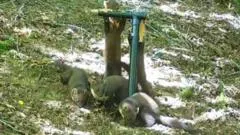
Pine marten kits have been born on Exmoor for the first time in more than a century, marking a significant milestone in efforts to restore the species to south-west England. A female marten was filmed by camera traps with four kits exploring the woodland, prompting conservationists to hail the birth as strong evidence that the reintroduced animals are beginning to establish themselves in the area.
The kits are the offspring of pine martens brought in last year from Scottish Highland populations by the Two Moors Pine Marten Project, which released nine females and 10 males on Exmoor. The find follows a similar breeding success on Dartmoor, where 15 pine martens were released in 2024 and kits were filmed there a year ago. Pine martens, tree-climbing members of the weasel family, were hunted to extinction in the region over a century ago, and while project staff, aided by local volunteers monitoring cameras and den boxes, describe the breeding success as encouraging, they caution the population's recovery remains in its early, fragile stages.
In short
- Pine marten kits born on Exmoor for first time in 100+ years
- Species reintroduced from Scotland last year by conservation project
- Follows similar breeding success on Dartmoor; recovery still fragile
Explained simply
Pine martens are small, tree-dwelling members of the weasel family that were once widespread across Britain but were hunted to extinction in south-west England over a century ago. Conservation projects are now attempting to restore these carnivores to areas where they previously lived.
The Two Moors Pine Marten Project has released animals from healthy Scottish populations to Exmoor and Dartmoor, two areas in south-west England where the species once lived. Breeding has already been documented on Dartmoor, suggesting that reintroduction can work in this region.
Successful breeding among reintroduced animals demonstrates that they are surviving and reproducing in their new environment, which is essential for the species to recover in the long term. Conservationists view such breeding as encouraging, though they emphasise that newly established populations remain vulnerable and require ongoing protection and monitoring.