Science news and discussion on TalkFuse.
Mountaineer who began fossil hunting after near-death experience discovers rare ‘sea dragon’
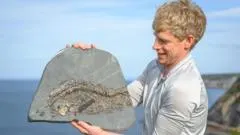
Matthew Myerscough, a mountaineer who survived being buried in an avalanche on Yr Wyddfa in 2014, began fossil hunting as part of his recovery from post-traumatic stress disorder. His new hobby led to the discovery at Lavernock Point of a rare Jurassic marine reptile jawbone, believed to be the first plesiosaur find of its kind in Wales, highlighting the scientific value amateur fossil hunters can bring.
Myerscough and two other fossil hunters spotted the large bone in limestone after walking along the Vale of Glamorgan coast. Experts identified it as the lower jaw of a rhomaleosaurus, a carnivorous “sea dragon” dating from about 201 million years ago; National Museum Cardiff is continuing research and the group hopes the discovery will result in an academic paper.
In short
- Fossil hunting aided Myerscough’s recovery after a near-fatal avalanche.
- He found a 201-million-year-old marine reptile jawbone in Wales.
- Museum researchers are studying the potentially significant discovery.
Explained simply
Matthew Myerscough survived a serious avalanche on Yr Wyddfa (Snowdon) in North Wales in 2014. He took up fossil hunting as part of his recovery from post-traumatic stress disorder in the years that followed.
Whilst walking along the Vale of Glamorgan coast at Lavernock Point, Myerscough and two fellow fossil hunters discovered a large bone embedded in limestone. It was later identified as the lower jawbone of a rhomaleosaurus, a carnivorous marine reptile that lived roughly 201 million years ago.
This is thought to be the first fossil of this particular type of ancient sea reptile ever found in Wales. The discovery shows that amateur fossil hunters can make scientifically valuable finds, not just trained scientists.