World news and discussion on TalkFuse.
Migrants seen swimming around border fence of Spanish enclave Ceuta
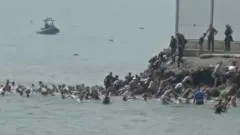
Hundreds of migrants have entered Spain’s North African enclave of Ceuta from Morocco, with footage showing people swimming around the border fence or using inflatables, while others passed through a gate. The arrivals have put significant pressure on local resources, prompting Ceuta’s leader to call for intervention from Spain’s national government.
Spanish media, cited by Reuters, estimated that between 2,000 and 3,000 people entered Ceuta on Thursday, although Spain’s Guardia Civil had not confirmed the figure. Ceuta, located on Morocco’s northern coast, has long been a key crossing point for people seeking to reach Europe.
In short
- Hundreds entered Ceuta from Morocco by sea and through a border gate.
- Local leaders say the arrivals are overwhelming resources.
- Reports estimate 2,000 to 3,000 crossings on Thursday.
Steelman: both sides, in good faith
The strongest fair case each way — we don't pick a winner.
The case for
Spain should manage its borders and ensure that arrivals can be identified and assessed safely, while giving local authorities the support needed to cope with sudden pressure on housing and public services. A controlled system can help distinguish protection claims from other migration cases and reduce dangerous crossings by making procedures clearer.
The case against
People fleeing danger or hardship should have a fair chance to seek protection, and border controls must not prevent access to asylum procedures or expose people to greater risks. Spain and the EU could share responsibility with Ceuta and Morocco through humane reception, prompt case assessments and cooperation that addresses why people undertake perilous journeys.
Explained simply
Ceuta is a Spanish territory on Morocco's northern coast and one of only two Spanish enclaves in North Africa. Although located on the African continent, it remains under Spanish sovereignty and is legally part of Spain.
For decades, Ceuta has served as a key crossing point for migrants attempting to reach Europe from North Africa. Its position makes it an important gateway into mainland Spain and the broader European Union for those seeking to migrate.
The enclave has a relatively small population and limited infrastructure compared to mainland Spain. Large numbers of arrivals place significant strain on local resources and services.