Video games news, releases, esports and culture — all the biggest gaming stories in one place.
Godot supports coding in Sumero-Akkadian Cuneiform, if you needed another reason to switch game engines
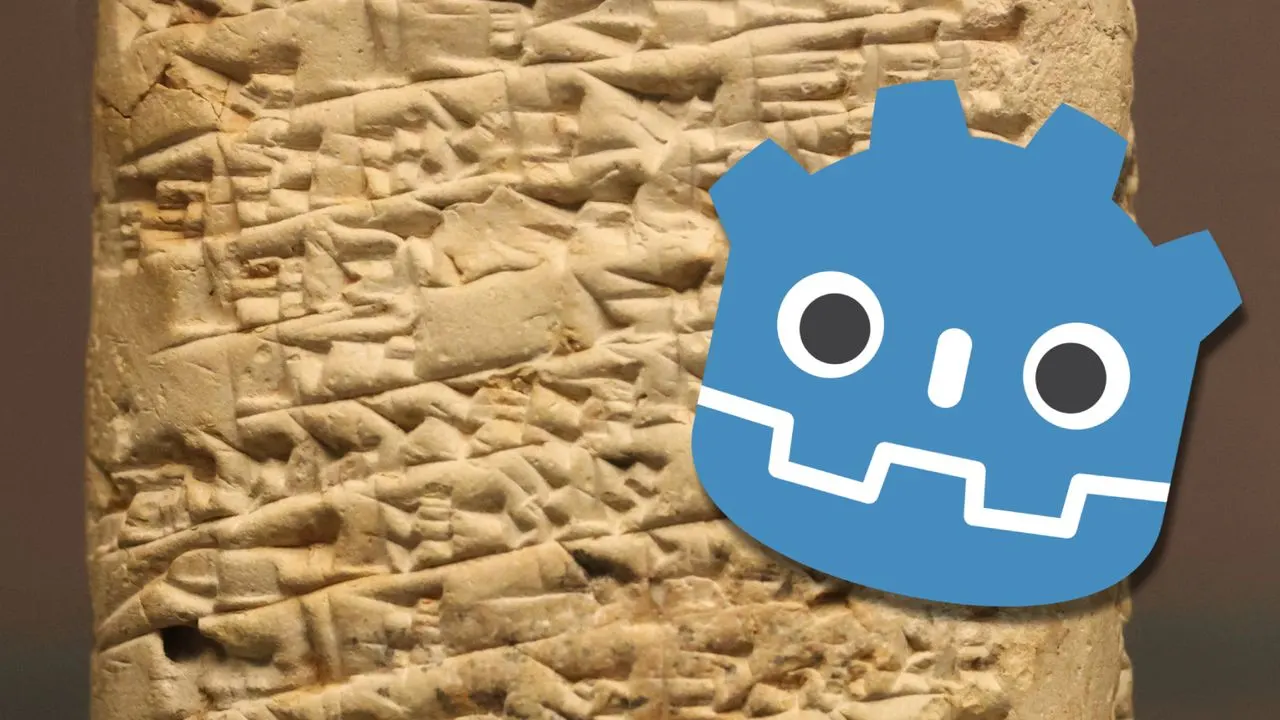
Godot, the open-source game engine, has added native support for writing code using Sumero-Akkadian cuneiform characters. The unusual feature highlights the engine’s flexibility and its ability to accommodate non-Latin writing systems, although it is chiefly a novelty for most developers.
Cuneiform was used in ancient Mesopotamia for languages including Sumerian and Akkadian, making it one of the world’s earliest writing systems. The support means programmers can use these Unicode characters in Godot’s scripting environment, rather than being limited to conventional Latin-based identifiers.
In short
- Godot now supports Sumero-Akkadian cuneiform in code.
- The feature demonstrates broad Unicode support.
- It is mainly a programming novelty.
Explained simply
Godot is an open-source game engine that developers use to create video games. It is free to use and maintained by a community of programmers, making it a popular alternative to commercial game development tools.
Cuneiform is one of the world's oldest writing systems, developed in ancient Mesopotamia to record languages including Sumerian and Akkadian. Godot's new feature allows developers to write code using cuneiform characters, rather than being restricted to the standard Latin alphabet used in most programming.
This addition highlights Godot's flexibility in supporting different writing systems. Whilst most developers would find it a novelty rather than a practical tool, it demonstrates the engine's willingness to accommodate unconventional requests.