World news and discussion on TalkFuse.
20 years ago, Dead Rising showed a different path for open worlds, and more games should pinch its ideas
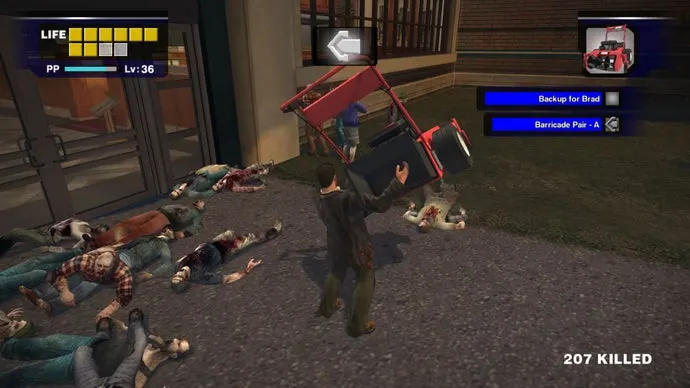
Rock Paper Shotgun argues that Dead Rising, released 20 years ago, offered a more flexible model for open-world games than many modern titles. Its three-day deadline gives events structure without forcing players to follow the main story, allowing them to leave immediately, investigate the outbreak, rescue survivors, fight bosses or simply experiment in the mall.
The game’s shopping-mall setting is praised as a dense, interactive space whose shops naturally supply food, weapons and costumes, while also supporting satire of consumerism. Although its map is modest by current standards, the article says its variety, atmosphere and willingness to accommodate player-driven behaviour remain notable.
In short
- Dead Rising balanced time pressure with unusual player freedom.
- Its mall was dense, interactive and thematically effective.
- The article argues modern open worlds should borrow its ideas.
Steelman: both sides, in good faith
The strongest fair case each way — we don't pick a winner.
The case for
Dead Rising’s advocates argue that its time limit and compact mall create meaningful freedom: players make real choices about what to pursue, accept missed opportunities, and shape their own stories rather than merely clearing an enormous checklist. Its dense, legible setting also makes exploration purposeful, with shops, weapons, food and survivors woven into the world’s fiction, while the consumerist satire gives the chaos a distinctive tone. They contend that more open-world games should borrow this willingness to trade sheer scale for reactivity, consequence and player-led experimentation.
The case against
Critics may argue that Dead Rising’s design is memorable precisely because it is unusually demanding, not because it should become a broad model for open worlds. A strict clock, easily missed content and limited guidance can turn exploration into anxiety or repeated playthroughs, particularly for players who value the ability to proceed at their own pace and see a complete story. Modern larger worlds can also offer rich environmental storytelling and optional activities without imposing failure states, so its ideas may be best used selectively rather than treated as a superior alternative.
Explained simply
Dead Rising is a 2006 zombie action game set in a shopping mall during an outbreak. Players control Frank West, a photojournalist who is trapped inside and has three in-game days to find out what has happened before a rescue helicopter is due.
The mall is filled with survivors to help, hostile characters to confront and large numbers of zombies, but players can decide how much of the central investigation to follow. Everyday shop items can be used as food, weapons or costumes, making the setting part of the game’s systems rather than simply a backdrop.
Open-world games are games that let players choose where to go and what to do within a larger area. Dead Rising is often discussed because it combines that freedom with a fixed time limit, creating consequences and a sense of urgency without requiring every player to take the same route.