Infantino on the brink? Who might replace him if he goes?
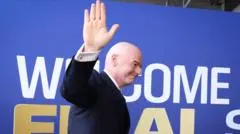
Fifa president Gianni Infantino is facing growing pressure after European, North and Central American, and Asian football bodies criticised his leadership and threatened to boycott Fifa competitions. The dispute has raised doubts over whether he can retain enough support to secure another term, although the article stresses that Fifa’s political structure may still protect him.
Infantino, 56, has led Fifa since 2016 and has twice been re-elected unopposed; another uncontested election had been expected next March. He first won the presidency by 115 votes to 88 against Sheikh Salman al-Khalifa, while no Fifa president has been defeated in an election since 1974. His adviser Carlos Cordeiro has resigned, and Fifa’s chief operating officer said its administration had been deceived about the disputed project.
- Infantino faces an unusually broad revolt from football’s regional bodies.
- His position remains uncertain despite strong Fifa political experience.
- No Fifa president has lost an election since 1974.
New here? Start with this
Fifa is the international body that runs football’s biggest tournaments, including the men’s and women’s World Cups. Its president leads the organisation and is chosen by votes from national football associations, which are grouped into regional confederations.
Gianni Infantino has been president since 2016 and has twice been re-elected without opposition. Fifa has six regional confederations, so support from several regions can matter in a leadership contest, while the organisation’s voting system may also shape who can challenge him.
The dispute has put attention on whether Infantino can keep the backing needed for another term and who might stand if he does not. Any successor would take charge of a body with influence over international competitions, football funding and the sport’s rules.
Both sides, in good faith
The strongest fair case each way — we don't pick a winner.
The case for
Continental football bodies have united in unprecedented public criticism and boycott threats, whilst his adviser resigned and FIFA's leadership admitted being deceived about significant projects. Those seeking change argue this represents a fundamental governance crisis that cannot be resolved by institutional structures alone; FIFA's credibility now depends on acknowledging that transparent, accountable leadership has become incompatible with Infantino's continued tenure.
The case against
Infantino has twice been re-elected unopposed and no FIFA president has faced electoral defeat since 1974, suggesting institutional systems designed to provide governance stability. Supporters argue his reforms—including World Cup expansion—demonstrate constructive leadership, and that organised opposition may reflect factional interests rather than genuine consensus; replacing him under pressure could undermine FIFA's governance more than addressing specific grievances through existing channels.