World news and discussion on TalkFuse.
‘People are dying here’: Migrants who broke into Europe tell other Moroccans to stay at home as Spain erects massive inflatable barriers in bid to stop 60,000-strong ‘invasion’
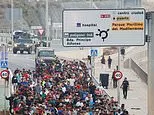
Spain's Prime Minister Pedro Sánchez has criticised what he called the "selfish, polarising, unlawful" response of some EU countries after roughly 60,000 Moroccan migrants illegally crossed into the Spanish enclave of Ceuta. The mass crossing, which prompted Spain to deploy troops and install a large inflatable sea barrier, has strained relations within the bloc, with 22 of the EU's 27 member states demanding emergency talks and neighbouring countries tightening their own border controls in response.
Officials said about 48,000 of those who entered on Thursday had since returned to Morocco, though small groups reportedly attempted fresh crossings on Saturday, and Spanish forces have been escorting migrants back to the border while others hide in tunnels or roam Ceuta's streets. At least 67 people died attempting the crossing, with some drowning or killed in a stampede near a breakwater, prompting migrants who reached Ceuta to warn compatriots against following them, with one telling El País: "People are dying here. I beg you… don't do it." Sánchez has called for an urgent meeting of EU interior ministers, insisting border security is a shared EU responsibility, while accusing critics of being driven by "prejudice, fake news, ignorance, or political interest."
In short
- 60,000 Moroccan migrants crossed into Spain's Ceuta enclave; 48,000 later returned.
- At least 67 migrants died; survivors urge others not to attempt the crossing.
- Spain installs inflatable sea barriers as EU allies clash over the crisis response.
Steelman: both sides, in good faith
The strongest fair case each way — we don't pick a winner.
The case for
Nations have legitimate interests in controlling their borders and maintaining orderly, rule-based immigration systems; when 60,000 people attempt illegal mass entry, decisive government response protects national sovereignty and public services. The deaths underscore real dangers of illegal crossings; barriers and enforcement deter such routes and serve humanitarian purposes by preventing these tragedies. Accepting mass illegal entry without consequence would undermine legal immigration pathways and signal that asylum systems can be bypassed through organised trafficking.
The case against
Border barriers address symptoms rather than causes—poverty, conflict, and absent opportunity drive migration, and deterrence creates tragedy rather than preventing it. Establishing legal asylum pathways would address this directly, allowing vulnerable people to seek safety without lethal smuggling routes. Wealthier EU nations possess capacity and moral obligation to share responsibility fairly for global displacement; characterising migrants as an invasion evades this responsibility.
Explained simply
Ceuta is a Spanish city on the North African coast, bordered by Morocco and separated from mainland Spain by the Mediterranean Sea. Its location makes it a point where people travelling from Africa try to enter the European Union, often by crossing the border or the sea.
Spain is responsible for policing Ceuta’s border, while Morocco is a key neighbour in managing migration routes. The European Union’s member states also discuss shared border and asylum policies, though they do not always agree on how to respond to arrivals.
People attempting the crossing may be fleeing hardship or seeking safety and work, but the journey can be dangerous. How Spain and other European countries manage migration affects border security, relations with Morocco and the treatment of people seeking entry.