Technology news and discussion on TalkFuse.
Here’s how engineers plan to save the satellite sent to save NASA’s Swift mission
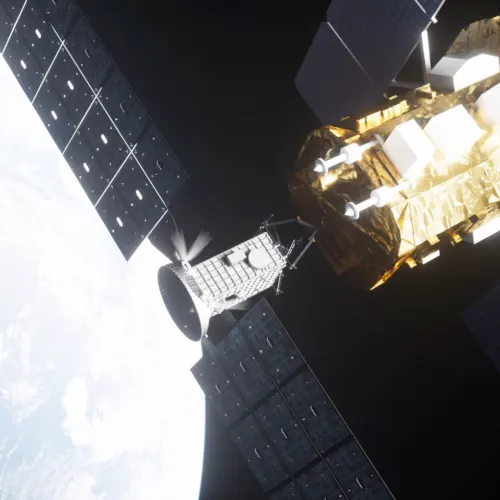
Katalyst Space Technologies is trying to regain control of Link, a small satellite launched to rescue NASA’s ageing Swift gamma-ray observatory, after it began spinning uncontrollably and lost two of its three reaction wheels. The incident threatens a time-sensitive mission that would be NASA’s first commercial servicing of one of its own satellites, as Swift will soon fall too low for a successful orbit-boosting attempt.
Link, built under a $30 million NASA contract, launched on 3 July and had been operating normally until the failure last Saturday. Engineers found a fault affecting cold-gas thrusters, but power, electric propulsion and capture hardware remain healthy; by using gimballed xenon plasma thrusters against the rotation, they had reduced the spin from about 9 to 4 degrees per second by Friday. Once steadier, the team plans to restore better communications, download diagnostic data and deploy revised control software developed with NASA.
In short
- Link satellite lost attitude control during Swift rescue mission.
- Engineers have halved its spin using electric thrusters.
- Swift’s declining orbit leaves little time for recovery.
Explained simply
NASA’s Swift is a space telescope that detects gamma-ray bursts, brief and powerful flashes from distant parts of the universe. It has been in orbit for many years, and its orbit is gradually getting lower; raising it could extend the time it can continue observing.
Katalyst Space Technologies built Link, a small satellite designed to meet Swift in orbit and attach to it so it can be raised. NASA funded the project through a contract, making it a planned commercial service of a government satellite. The mission matters because Swift’s orbit leaves a limited window for an attempt, and the two spacecraft must safely meet and connect.