A bruising 24 hours – what next for Fifa and under-pressure Infantino?
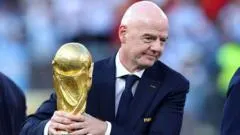
Fifa president Gianni Infantino's position has come under serious threat after a plan to sell stakes in Fifa competitions to private investment firms, reportedly without wider knowledge, triggered a backlash from football's governing bodies. Uefa, long his fiercest critic, threatened to boycott all Fifa competitions including the World Cup before declaring it had lost confidence in his leadership, even after Infantino backtracked on the plan early on Saturday. Concacaf called for a full review of Fifa's leadership, allies within the Asian Football Confederation distanced themselves, and two of Infantino's closest aides resigned, leaving him more isolated than at any point since becoming president in 2016.
Removing Infantino is not straightforward. He could resign, as predecessor Sepp Blatter did in 2015, or attempt to hold on until seeking a fourth term in March's presidential election. An emergency Fifa Council meeting could be called if 19 of its 37 members request one, though doubts remain over whether that threshold can be reached, and even then Infantino could refuse to quit. A more decisive route would be an extraordinary congress, triggerable by Uefa alone given its 55 member associations exceed the required one-fifth (43) of Fifa's 211 members, but it would take two to three months and require 106 votes to pass, with Africa, Conmebol and Oceania so far not backing the criticism.
- Infantino faces backlash after secret plan to sell Fifa competition stakes
- Uefa says it has lost confidence in his leadership as president
- Removing him requires resignation, council pressure or a lengthy congress vote
New here? Start with this
Fifa runs international football, including the World Cup, and its president leads the organisation. Gianni Infantino has held the job since 2016; national football associations belong to Fifa, while regional bodies such as Uefa and Concacaf represent groups of countries.
Fifa’s competitions are a major source of income and influence, so decisions about who can invest in them affect the organisation’s members. The Fifa Council oversees the organisation between congresses, where member associations can vote on major questions, including the presidency.
Infantino’s future matters because any challenge to his leadership would depend on support from those member associations. Different regions have different numbers of votes, and the rules set thresholds for calling a meeting or changing the president.
Both sides, in good faith
The strongest fair case each way — we don't pick a winner.
The case for
Infantino has delivered significant governance reforms and World Cup expansion since 2016, and his swift reversal of this problematic decision demonstrates responsiveness to feedback. The removal process is deliberately complex to preserve institutional stability, and notably Africa has not joined calls for removal, suggesting this is not universal loss of confidence; the established March election provides the proper mechanism for members to assess his complete record.
The case against
This breach represents a fundamental governance failure extending beyond one error—his closest aides resigned immediately, signalling structural problems in how he exercises authority. Allowing such contempt for consultation and transparency to stand unpunished would devastate accountability for all future leaders, and waiting months for an election whilst credibility suffers is unacceptable when decisive action is possible now.