Culture news and discussion on TalkFuse.
Why has the Left stayed silent on the terrifying scenes in Ceuta? Because they know it’s what their borderless ‘utopia’ really looks like: STEPHEN DAISLEY
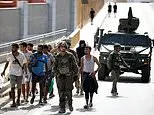
Daily Mail columnist Stephen Daisley argues that the political Left has gone quiet over a mass crossing of migrants into the Spanish enclave of Ceuta, suggesting this silence reflects discomfort at seeing their "open borders" ideals play out in reality. He contends the incident exposes the practical consequences of pro-migration policies that progressives typically champion, framing it as proof that such policies inevitably fail when implemented.
The piece links the Ceuta crossings to Spanish Prime Minister Pedro Sanchez's April amnesty offer for illegal migrants, which drew 1.2 million applications before being closed two months later, an outcome Daisley says signalled to migrants that unlawful entry could be rewarded. He notes reports of around 60,000 people crossing into Ceuta and at least 67 deaths in the recent surge, with most having since returned to Moroccan soil, and draws a parallel with Angela Merkel's mass acceptance of migrants into Germany a decade ago, which he claims has since been followed by economic stagnation and rising crime.
In short
- Columnist claims Left's silence on Ceuta migrant crisis reveals "open borders" failures
- Roughly 60,000 crossed into Ceuta; at least 67 reportedly died
- Piece blames Spain's failed migrant amnesty scheme for encouraging the crossings
Steelman: both sides, in good faith
The strongest fair case each way — we don't pick a winner.
The case for
Mass migration incidents like Ceuta, with reported deaths and overwhelming local services, demonstrate that progressive policies championing more open migration may have serious unintended consequences. When politicians offer amnesties for illegal entry, critics argue this incentivises further dangerous crossings rather than orderly immigration. Advocates of this view contend that the Left's reluctance to grapple honestly with these failures—and instead characterise any border enforcement as inhumane—prevents necessary course correction and may ultimately harm the migrants such policies aim to help.
The case against
The Ceuta incident reflects not failed progressive policy but the desperation of people fleeing poverty and violence—problems that restrictive borders alone cannot solve. Progressives argue for managed immigration with fair asylum processing, not borderless chaos, and note that restrictive policies have not prevented crossings; they have only made them deadlier. Rather than abandoning humanitarian principles, this perspective holds that addressing root causes of migration, creating safe pathways, and sharing responsibility internationally represent genuinely humane and practical solutions superior to fortress-border approaches.
Explained simply
Ceuta is a Spanish territory on the North African coast, separated from Morocco by a land border. Its position makes it a route for people seeking to reach Spain and the wider European Union, often after travelling through or from other parts of Africa.
Spain’s prime minister, Pedro Sánchez, leads a government that has supported measures to regularise the status of some migrants already in Spain. Migration policy is debated across Europe: some argue that offering legal status can help people and bring them into regulated systems, while others say it may encourage further irregular migration.
The political Left includes parties and campaigners who often support migrant rights and more open approaches to immigration, though their views differ. Debates over border controls, asylum and responsibility for people on the move matter to Spain and other European countries, as well as to migrants and the communities they reach.
Art Culture Entertainment Horror World