Culture news and discussion on TalkFuse.
National Gallery security staff segregated like ‘second-class citizens’, curator claims
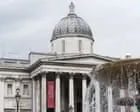
A senior curator at the National Gallery has told the Guardian that outsourced security guards, most of whom are from minority ethnic backgrounds, are effectively segregated from the gallery's mainly white in-house staff. While employees such as curators and marketing staff use a bright, well-equipped "hub" with a subsidised canteen, security guards are confined to a cramped basement area described as dingy, unventilated and infested with rodents, unable even to sit in the staff hub during breaks.
The gallery has cited overcrowding as the reason for excluding guards from the hub, but staff note this restriction applies even at weekends and holidays when few employees are present, and that of roughly 60 guards on site, only a handful take breaks simultaneously. The PCS union, which represents the security staff, wrote to the gallery's director on 1 July arguing the arrangement could be discriminatory under the Equality Act 2010, and is still awaiting a response; it also warned that stretching guards across up to four rooms at once risks the safety of the collection, pointing to past incidents such as the Just Stop Oil attacks on Van Gogh's Sunflowers and Velázquez's Rokeby Venus.
In short
- Curator says National Gallery segregates mostly minority-ethnic security staff in basement
- In-house staff use bright "hub"; guards get dingy, rodent-affected space
- PCS union claims potential Equality Act breach, awaits gallery's response
Steelman: both sides, in good faith
The strongest fair case each way — we don't pick a winner.
The case for
The segregation of security staff, predominantly from minority ethnic backgrounds, into a basement described as dingy, unventilated, and rodent-infested raises serious concerns about working conditions and equality. The gallery's stated justification of overcrowding is contradicted by the evidence that restrictions apply even at weekends and holidays when the hub is under-occupied. This arrangement appears to violate the Equality Act 2010, as it effects segregation by ethnicity without adequate justification.
The case against
Security services are outsourced to a contractor, and the gallery must manage facilities for multiple worker categories with different contractual arrangements. Whilst the basement conditions require improvement, providing outsourced staff with entirely equivalent facilities as core employees is operationally and financially complex. The ethnic composition of security workers may reflect labour market patterns in that sector rather than the gallery's own employment decisions, and maintaining separate facilities based on employment category is not inherently discriminatory under law.
Explained simply
The National Gallery is a publicly funded museum in London, where curators and other staff work alongside security guards who protect visitors and artworks. The guards are employed by an outside contractor, while many other gallery staff are employed directly by the institution.
The Equality Act 2010 protects people from discrimination at work, including discrimination linked to race. The Public and Commercial Services union represents the guards and can raise workplace concerns on their behalf. The issue matters both for how staff are treated and for the arrangements used to protect the gallery’s collection.