Entertainment news and discussion on TalkFuse.
When the two greatest guitar albums were recorded at the exact same time in 1967
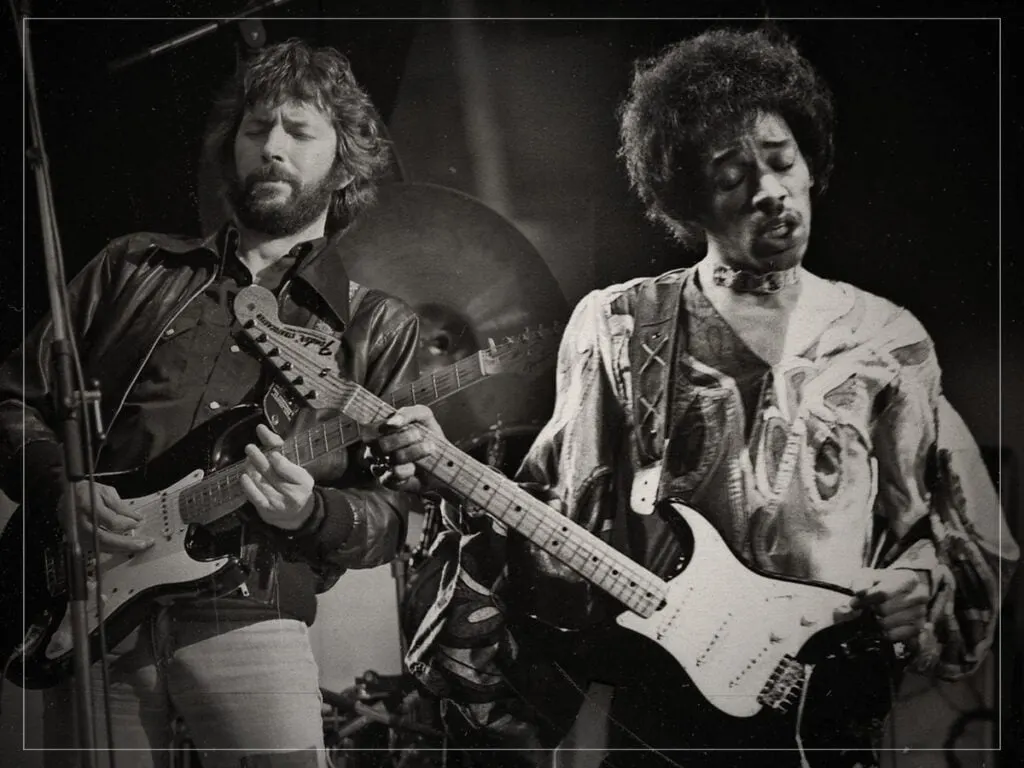
Eric Clapton and Jimi Hendrix fundamentally transformed how the guitar would be played and perceived in modern music. Clapton, performing with Cream, pioneered a fusion of blues, R&B and pop that essentially created a new sound before progressive rock was formally established. Hendrix brought technical mastery alongside an unorthodox, flamboyant approach that expanded what musicians believed possible on the instrument. The two icons even crossed paths in London early in their careers, sharing an impromptu stage performance that astonished audiences.
What few observers realised at the time was that Clapton and Hendrix were simultaneously recording what would become two of the most influential guitar albums in history during 1967. Whilst Clapton's Cream worked on "Disraeli Gears" in New York, Hendrix was in London creating "Are You Experienced", with both projects emerging from the same period of creative ferment and setting the standard for guitar-driven rock music that would endure for decades.
In short
- Clapton's Cream and Hendrix recorded foundational guitar albums simultaneously in 1967 on opposite sides of the Atlantic
- Both artists fundamentally shaped modern rock guitar through contrasting revolutionary approaches to the instrument
Explained simply
In the 1960s, rock musicians began bringing blues and rhythm and blues into louder, more experimental pop music. The electric guitar became a central instrument, and new recording techniques helped artists create sounds that had been less common in popular music.
Eric Clapton was the guitarist in Cream, a British trio known for mixing blues with rock and pop. Jimi Hendrix was an American guitarist who moved to London and became known for an expressive style that pushed the instrument in new directions; the two briefly played together on stage there.
In 1967, Cream recorded Disraeli Gears in New York while Hendrix recorded Are You Experienced in London. Their work helps explain why that year is often seen as an important moment in the development of guitar-led rock.