ICE Collected Nearly 1 Million People’s DNA Last Year—Including Young Children
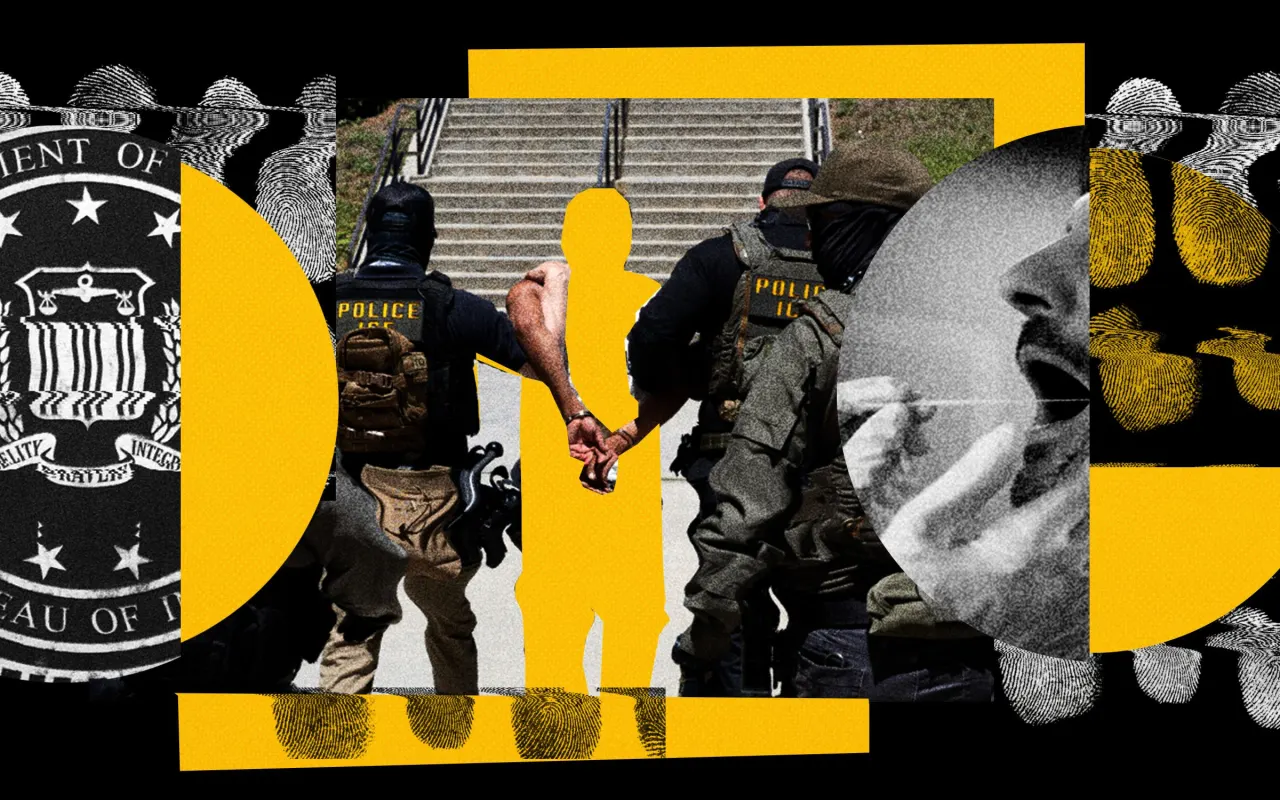
US Immigration and Customs Enforcement (ICE) has dramatically expanded its collection of detainees' DNA, with new research from Georgetown Law's Center on Privacy and Technology estimating that the agency added as many as 920,000 genetic profiles to a national criminal database in 2025 alone. This matters because the vast majority of people in ICE custody have no criminal conviction, and being undocumented in the US is typically a civil rather than criminal matter, yet their DNA is being entered into the FBI's Combined DNA Index System (CODIS), a database built for criminal investigations, where it can be matched against crime-scene evidence indefinitely.
The report highlights the case of Hugo Moreno-Mendez, who was prosecuted and convicted for refusing to provide a DNA sample while in ICE custody, despite the agency previously saying it was unaware such prosecutions had ever succeeded. ICE's DNA collection was described as marginal historically, with roughly 20,000 samples taken across fiscal years 2020 and 2021, compared with the near-million estimated for 2025. The programme has also extended to children in family detention, including at a facility in Dilley, Texas, prompting criticism from members of Congress, while DHS has defended the practice as a border-security measure without directly addressing the scale of the increase.
- ICE may have added ~920,000 DNA profiles to FBI database in 2025
- Most detainees have no criminal conviction; DNA stored indefinitely
- Children swabbed at Texas detention centre, sparking congressional criticism
New here? Start with this
ICE, part of the US Department of Homeland Security, is dramatically expanding its collection of DNA from people it detains, including undocumented immigrants who have committed no crime. Under a policy that began during the previous administration and has continued since, ICE has been required to collect DNA samples from most people in its custody, which are then added to CODIS, the FBI's national database normally used to solve and prevent crimes.
New analysis suggests the scale of this collection has grown sharply, from a relatively small number of samples a few years ago to hundreds of thousands taken in the past year alone, including from children held with their families. Once entered into the database, genetic profiles can remain there indefinitely and be used to match people against crime scenes, which raises questions given that most of those sampled are not accused of any offence.
The issue touches on broader debates about immigration enforcement, civil liberties and how far government data collection should extend into people's lives, particularly since being in the country without legal permission is usually treated as a civil rather than criminal matter under US law.