ALBATROSS drone boat spins down from aircraft to monitor oceans
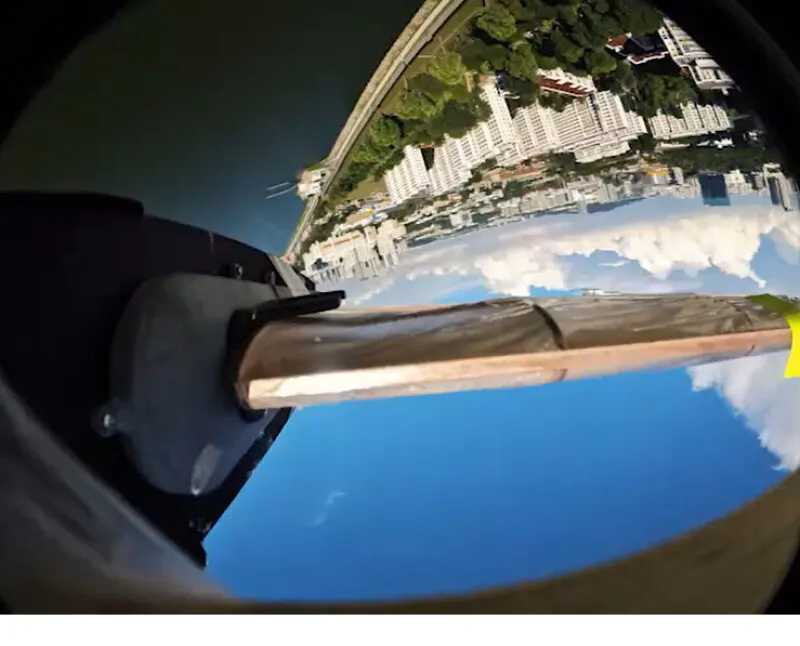
Researchers at Singapore University of Technology and Design have developed ALBATROSS, a sailboat drone that can be dropped from aircraft and descends in a controlled spin like a maple leaf seed. The prototype combines aerial deployment with autonomous sailing capabilities, filling a gap between expendable ocean instruments and larger floating robots. Its simple design eliminates the need for complex landing systems, making it practical for rapid deployment to monitor environmental events like oil spills or weather changes.
The ALBATROSS weighs just 1.107 kg and operates with only three actuators and three primary sensors, using bio-inspired rigid wingsails and a rudder that mimics a fish's tail fin for propulsion. It can deploy over 100 km away, significantly exceeding the roughly 7 km range of comparable hybrid systems. The development comes as the sea drone market grows rapidly, with forecasts suggesting it will reach €18.9 billion by 2030, with most uses focused on civilian applications including scientific research, commercial operations, and search and rescue.
- Spinning robot sailboat prototype drops from aircraft and sails autonomously
- 1.1 kg drone has 100+ km deployment range without complex landing systems
- Sea drone market projected to hit €18.9 billion by 2030
New here? Start with this
Understanding and protecting the world's oceans has become increasingly important as climate change and pollution pose growing environmental challenges. Traditional monitoring methods, however, are limited: ships are expensive and slow to deploy, and fixed instruments can only measure one location, leaving vast ocean areas poorly monitored.
Researchers worldwide have been developing unmanned sea drones to address these limitations, creating robotic vessels that can be rapidly deployed to gather data from remote ocean areas. These systems must balance several practical challenges: how to get them into the water, how far they can operate, and whether they are affordable enough for widespread use.
As the technology matures, the market for sea drones is growing rapidly, with applications spanning environmental monitoring, scientific research, commercial operations, and emergency response. Investment in this technology reflects growing recognition that better ocean monitoring systems are essential for addressing environmental challenges and understanding our seas.
Read the full article at the source →
Originally published by The Register as “It’s a bird, it’s a plane…well, more of a spinning parachute, but really it’s a droppable robot boat”.