World news and discussion on TalkFuse.
Opinion: When It Comes To Metroid’s Future, Familiar Is Better
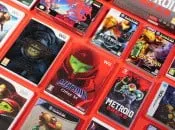
This opinion piece, published ahead of the original Metroid's 40th anniversary on 6th August, argues that Nintendo's Metroid franchise is best served by sticking to its established identity rather than chasing broader mainstream appeal. The author contrasts this with series like Zelda, which successfully reinvented itself with Breath of the Wild, suggesting Metroid's recent attempts at similar evolution—particularly with Metroid Prime 4—have instead undermined what makes the series distinctive, alienating both longtime fans and newer players without significantly boosting sales.
The piece cites Metroid Prime 4's addition of a chatty NPC companion and new "psychic powers" mechanics as changes that diluted the series' trademark isolated, atmospheric feel, resulting in underwhelming sales by Nintendo's standards. By comparison, the author holds up Metroid Dread—the franchise's best-selling entry at roughly 3 million copies—as proof that focusing purely on tight, tactile gameplay "feel" rather than genre-blending innovation is what resonates most with players, even if the series has never matched the sales of Nintendo's biggest franchises.
In short
- Opinion piece argues Metroid should stay true to its roots
- Metroid Prime 4's new features diluted the series' core appeal
- Metroid Dread's success shows familiarity outperforms reinvention
Steelman: both sides, in good faith
The strongest fair case each way — we don't pick a winner.
The case for
The success of Metroid Dread, which became the series' best-seller at roughly 3 million copies, provides compelling evidence that players respond most strongly to the franchise's core identity of atmospheric, solitary exploration and precise gameplay mechanics rather than broader innovations. When Metroid Prime 4 added narrative features like talkative NPC companions and new psychic power systems, these additions appear to have muddled rather than clarified the series' direction, resulting in disappointing sales that suggest both longtime devotees and newcomers found the changes off-putting rather than inviting. If Nintendo's own Zelda franchise shows that successful reinvention requires an exceptionally clear creative vision, Metroid's recent stumble suggests the safer course is to deepen what the series already does distinctively well.
The case against
Game franchises that resist evolution risk becoming stale and disconnected from broader audiences over time, as demonstrated by how Nintendo revitalised Zelda precisely through bold reimagining rather than incremental change. The weakness of Metroid Prime 4 likely reflects poor creative execution rather than a fundamental problem with evolution itself; one misstep should not condemn the principle of thoughtful innovation that could genuinely expand the player base whilst respecting what longtime fans value. Moreover, judging the merit of innovation on a single game's sales ignores the longer-term brand-building effects and overlooks whether more carefully conceived evolutionary steps might succeed where Prime 4 faltered, allowing Metroid to remain vibrant rather than resigned to repeating its established formula indefinitely.
Explained simply
Metroid is a Nintendo game series starring Samus Aran, a bounty hunter who explores dangerous alien worlds. Many of its games combine side-scrolling action with exploration, gradually giving players new abilities that open up previously inaccessible areas. The series is known for its solitary atmosphere and for making movement and combat central to the experience.
Nintendo has also developed Metroid Prime, a first-person branch of the series, alongside the side-scrolling games. Its choices about how much to change the formula matter because Metroid is less commercially successful than Nintendo’s biggest franchises, yet has a distinct identity and a long-standing fan base. Debates about its direction often centre on how to attract new players while keeping the qualities that existing players value.
Americas Art Culture Entertainment Gaming TV