EU calls for stronger borders after Ceuta migrant crossings
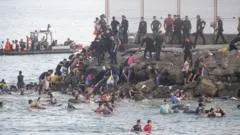
European Commission President Ursula von der Leyen has called for "united action" on border security following the chaotic entry of tens of thousands of migrants from Morocco into the Spanish exclave of Ceuta. The influx has strained relations among EU member states, with several countries criticising Spain's handling of the situation and Italy temporarily suspending its Schengen arrangement with the country, prompting Spanish Prime Minister Pedro Sánchez to accuse some governments of acting out of "prejudice, fake news, ignorance, or political interest".
Spain says around 69,500 migrants have now returned to Morocco, higher than initial estimates of 50,000, with 72 deaths recorded on the Spanish side of the border and 11 on the Moroccan side. EU interior ministers are due to hold emergency video talks on Tuesday, with von der Leyen urging the bloc to focus on five areas: preventing irregular migration through partner cooperation, strengthening external borders, early warning systems, dismantling smuggling networks, and reinforcing returns. Spain's interior minister said the situation had largely returned to normal and that the country was developing an inflatable sea barrier to deter further crossings.
In short
- Von der Leyen urges EU-wide action after Ceuta migrant surge from Morocco
- About 69,500 migrants have returned to Morocco; 83 deaths recorded overall
- Italy suspended Schengen with Spain, deepening diplomatic tensions
Steelman: both sides, in good faith
The strongest fair case each way — we don't pick a winner.
The case for
Strengthening borders is necessary to maintain orderly migration systems and address genuine humanitarian concerns. The chaotic scenes at Ceuta, with thousands breaching barriers and dozens dying in dangerous crossings, demonstrate that uncontrolled migration creates perilous situations for migrants themselves and overwhelms host communities' capacity to provide proper care and integration. EU member states have legitimate responsibilities to manage entry, allocate asylum resources fairly, and work with origin countries on root causes—none of which can function without clear border control and documented processing.
The case against
Focusing on border hardening abandons vulnerable people fleeing persecution and poverty whilst pursuing an impossible goal of total exclusion. The deaths at Ceuta reveal how desperation drives people to lethal risks; strengthening walls without addressing underlying crises in origin countries merely shifts suffering elsewhere. Wealthy EU states possess capacity to welcome and integrate migrants, whose labour and contributions benefit economies, yet prioritise barriers over investment in global development and conflict resolution. A genuinely humane approach requires examining why people migrate, supporting asylum systems, and recognising migrants' rights to seek better lives rather than simply making borders more hostile.
Explained simply
Ceuta is a Spanish city on the North African coast, surrounded by Morocco. Spain is part of the European Union and the passport-free Schengen area, so events at its borders can affect other European countries as well.
The European Commission, led by its president Ursula von der Leyen, works with EU member states on shared issues. Spain’s prime minister, Pedro Sánchez, leads the national government, while Morocco is a key neighbouring country in efforts to manage migration and border crossings.
The crossings have raised questions about how EU countries share responsibility for border security and respond to migration. They also affect relations between Spain, other EU members and Morocco, and have drawn attention to the risks people face when attempting to cross.
Europe Government Politics World