What will happen when a SpaceX rocket collides with the Moon?
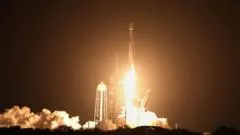
A discarded upper stage from a SpaceX Falcon 9 rocket is expected to strike the Moon on Wednesday, 5 August, after independent astronomers spotted it on an accidental collision course using public data. Nasa has confirmed there is no danger to Earth, but the event offers scientists a rare chance to study the effects of an impact on the lunar surface, with agencies and citizen astronomers preparing to observe it closely.
The rocket stage, roughly the size of a five-storey building and weighing at least 4,000kg, was launched in January 2025 as part of a US-Japanese mission carrying lunar landers. Travelling at about 5,400mph, it is predicted to hit near the Einstein Crater at 06:35 GMT, creating a crater over 17m wide and throwing up a dust plume that could reach 50km high. The impact won't be visible to the naked eye from Earth, but telescopes, Nasa's Lunar Reconnaissance Orbiter and South Korea's Danuri probe will track the collision for scientific study.
- SpaceX rocket stage set to hit the Moon on 5 August
- No danger to Earth, say Nasa officials
- Scientists will study the impact to learn about lunar collisions
New here? Start with this
Independent astronomers, rather than SpaceX or Nasa, first identified that a leftover part of a Falcon 9 rocket was on course to hit the Moon, after tracking it using publicly available orbital data. This "upper stage" is the section of the rocket that carries a payload into space and is usually left drifting once its job is done; in this case, it had launched lunar landers in January 2025 as part of a joint US-Japanese mission and has been in space ever since.
The event matters because it gives scientists an unusual opportunity to observe what happens when a known, human-made object strikes the Moon at high speed, rather than relying on estimates from natural meteor impacts. Nasa has stressed that the object poses no risk to Earth, and various space agencies, including those operating lunar-orbiting probes, are preparing to monitor the impact for research purposes.
The Moon has no atmosphere to protect it, meaning even relatively small objects can create sizeable craters and debris clouds on impact. This is not the first time space debris has struck the lunar surface, but tracked and predicted collisions like this one are rare, making it a notable event for the scientific community rather than the general public, since it cannot be seen without specialist equipment.