World news and discussion on TalkFuse.
Trump Fed chair’s inflation strategy: leave it to the market | Eduardo Porter
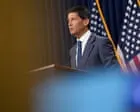
Kevin Warsh, Donald Trump's newly installed Federal Reserve chair, has drawn criticism for suggesting the central bank can leave the job of tackling stubborn US inflation largely to financial markets rather than acting itself. Speaking after the Fed's policy committee voted not to raise interest rates despite inflation running at double its 2% target, Warsh pointed to rising long-term bond yields as evidence that markets were already "doing quite a bit" of the necessary tightening, even though the Fed itself had "not done much in 42 days". Critics argue this hands-off approach echoes a familiar conservative contradiction — decrying government intervention while in charge of the very institution meant to intervene — and risks undermining the Fed's credibility as an economic steward at a delicate moment.
Markets reacted badly: US government bond prices fell, pushing long-term interest rates higher, with the yield on 30-year Treasury bonds hitting its highest level in 19 years, while stock markets also dropped. Investors voiced concern that Warsh's reluctance to raise rates, despite Trump's public demands for cuts, may be politically motivated rather than purely economic. Warsh described the economy as "solid" and labour markets as "strong" but offered little concrete policy guidance beyond saying he was "resolute" in doing his job. He has also floated holding fewer rate-setting meetings and scaling back post-meeting press conferences — a transparency practice introduced under former chair Ben Bernanke — fuelling worries about a less accountable, more opaque Fed.
In short
- Fed chair Kevin Warsh wants markets, not the Fed, to fight inflation
- Bond yields and stocks slid after his hands-off comments
- 30-year Treasury yields hit a 19-year high amid political pressure fears
Steelman: both sides, in good faith
The strongest fair case each way — we don't pick a winner.
The case for
Supporters of a market-based monetary approach argue that financial markets are efficient price discoverers that naturally impose tightening through rising long-term bond yields. If markets are already raising rates substantially in response to inflation concerns, additional Fed rate increases may prove redundant and unnecessarily damaging to economic growth and employment.
The case against
Critics contend that the Federal Reserve was created precisely because markets alone cannot reliably maintain price stability. Delegating inflation control to market forces whilst inflation remains substantially above target fundamentally undermines the institution's core mandate and credibility, particularly when coupled with proposals to reduce transparency through fewer rate-setting meetings and press conferences.
Explained simply
The Federal Reserve is the US central bank. It sets a key interest rate to influence borrowing and spending, with the aim of keeping inflation near its 2 per cent target while supporting jobs and economic growth.
Kevin Warsh leads the Fed, whose rate decisions are made by a committee. Higher rates can help cool inflation but make loans more expensive; lower rates can support economic activity but risk adding to price rises. Bond yields also affect borrowing costs, and can rise or fall as investors trade government debt.
The Fed’s independence and clear communication matter because households, businesses and investors use its decisions to plan. Its approach can affect prices, jobs, mortgages and government borrowing, while uncertainty about its intentions can move financial markets.
Americas Art Business Culture Economy Government Offbeat Politics Weird & Viral World