Video games news, releases, esports and culture — all the biggest gaming stories in one place.
Is 8GB VRAM enough for a graphics card in 2026? Yes, but GPU makers should still try harder
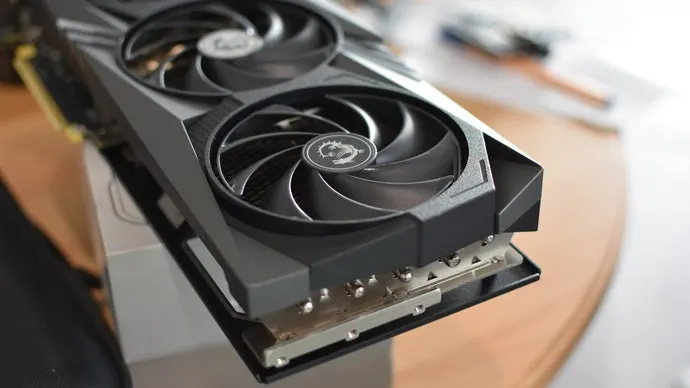
Rock Paper Shotgun tested whether 8GB of VRAM remains adequate for a graphics card in 2026, given that most low-end and mid-range GPUs still ship with this amount despite complaints from enthusiasts that it's insufficient. The author swapped their 24GB Radeon 7900 XTX for a borrowed 8GB RTX 4060 Ti and played a range of typical titles, concluding that 8GB is generally fine for most players, though the responsibility for improving VRAM allocation ultimately rests with manufacturers rather than consumers.
Across games including Crusader Kings III, Kerbal Space Program and Cyberpunk 2077, the drop to 8GB made surprisingly little difference once upscaling tools like DLSS were enabled, with Kerbal Space Program the only title to show real strain. The piece also notes that the majority of Steam users already play on 8GB or less, and that none of the world's most popular competitive multiplayer games or MMOs demand more VRAM than that, meaning most players can comfortably stick with cheaper 8GB cards.
In short
- 8GB VRAM still handles most popular games fine in 2026
- Author tested an 8GB RTX 4060 Ti against a 24GB card
- Most competitive multiplayer games and MMOs don't need more VRAM
Steelman: both sides, in good faith
The strongest fair case each way — we don't pick a winner.
The case for
Eight gigabytes of VRAM remains sufficient for the vast majority of players in 2026, as evidenced by real-world testing demonstrating minimal performance impact when using contemporary upscaling technologies such as DLSS. Since most popular games do not demand more than 8GB, the majority of Steam users already game comfortably on this amount, and competitive multiplayer titles—which dominate the gaming landscape—impose no requirement for additional memory. Purchasing a more expensive GPU with higher VRAM allocation represents poor value for consumers when upscaling tools can deliver comparable results, making 8GB the sensible choice for budget-conscious players.
The case against
GPU manufacturers have a responsibility to future-proof their products, as game engines continue to grow in complexity and memory demands will inevitably increase beyond today's baselines. Offering only 8GB when the technology exists to provide 12GB or 16GB at reasonable cost is a choice driven by profit margins rather than technical necessity, leaving consumers with hardware that becomes outdated sooner than it should. Upscaling represents a workaround that masks underlying memory constraints rather than solving them, and refusing to increase VRAM stifles innovation and forces consumers into more frequent upgrades.
Explained simply
VRAM is the memory on a graphics card that holds visual data a game needs while it runs. Cards with more VRAM can handle larger or more detailed graphics, but how much a game needs depends on its design and settings.
Graphics card makers such as Nvidia and AMD sell models with different amounts of memory, including many lower-priced cards with 8GB. Game makers also influence how much memory their titles use, and tools such as Nvidia’s DLSS can reduce the workload by rendering images at a lower resolution and scaling them up.
The amount of VRAM matters to people choosing a card, especially if they want to play demanding games at high settings. An 8GB card may suit many players, while memory needs can vary with the games and visual settings they choose.