Tom DeLay helped create TV ownership cap—he says Trump FCC has no authority to repeal it
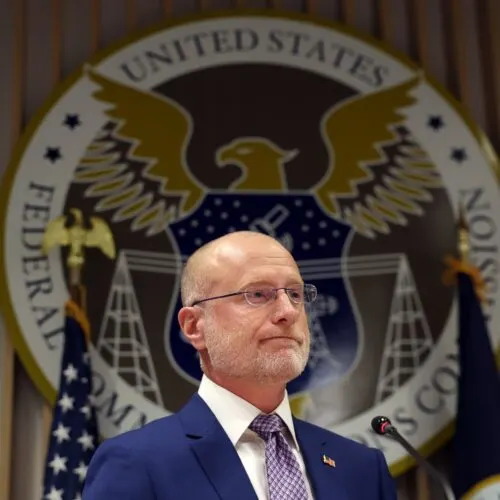
Former House majority leader Tom DeLay has warned that the Trump-era Federal Communications Commission (FCC) lacks the legal authority to scrap the 39 percent national TV ownership cap, a rule he helped write into law. His intervention comes days before the FCC, chaired by Brendan Carr, is due to vote on Thursday on a proposal to eliminate the cap and replace it with case-by-case reviews of broadcast mergers, a move critics say could concentrate media ownership and favour outlets friendly to President Trump.
The cap limits any single broadcaster from reaching more than 39 percent of US television households and was set at that level by Congress in 2004, after lawmakers overrode an earlier FCC decision to raise it to 45 percent. In a Daily Wire op-ed, DeLay argued that because the limit is written into statute, only Congress—not the regulator—can change it, and urged Carr to seek legislative approval instead. Past FCC leaderships, including under Democratic chair Tom Wheeler, have claimed authority to alter the cap outside periodic reviews, and Carr's FCC has already used a case-by-case approach to approve Nexstar's purchase of Tegna, suggesting any repeal could still face legal challenges.
In short
- DeLay says the FCC cannot legally scrap the 39% TV ownership cap.
- FCC chair Brendan Carr plans a repeal vote on Thursday.
- Congress, not the FCC, set the cap in law back in 2004.
Steelman: both sides, in good faith
The strongest fair case each way — we don't pick a winner.
The case for
The strongest case for this view emphasises that Congress deliberately codified the 39 percent cap into statute in 2004, which represents an explicit legislative decision rather than a delegated regulatory choice. When Congress enacts a specific numerical limit into law, administrative agencies operating under delegated authority cannot simply repeal it through rulemaking—doing so would exceed their statutory mandate and violate basic principles of separation of powers. The rule of law requires that regulatory bodies respect explicit congressional decisions unless Congress itself chooses to change them.
The case against
The strongest case for this view is that the Telecommunications Act gives the FCC expansive authority to regulate broadcast ownership in accordance with the 'public interest,' and this broad delegation necessarily includes the power to revise ownership caps through notice-and-comment rulemaking. The FCC has exercised this authority under multiple administrations, and precedent suggests the cap is appropriately modifiable through proper regulatory procedures. Additionally, case-by-case review could provide more nuanced scrutiny of mergers than a blunt percentage cap, allowing the FCC to protect legitimate public-interest concerns whilst adapting to evolving media landscapes.
Explained simply
The Federal Communications Commission regulates broadcasting in the United States, including how widely one company can reach television viewers. The national ownership cap sets a limit of 39 per cent of US television households for any single broadcaster.
Congress set that limit in law in 2004, after rejecting an earlier FCC plan to raise it. Tom DeLay, then a senior Republican in the House of Representatives, helped write the law.
The FCC is an independent regulator, while Congress makes federal laws. The dispute is whether the commission can change a limit written into statute, a question that could affect how much of the television market individual companies may own.
Entertainment Government Politics TV