Entertainment news and discussion on TalkFuse.
Mini Review: Zero Racers (Virtual Boy) – Is This F-Zero Spin-Off The VB’s Long-Lost Killer App?
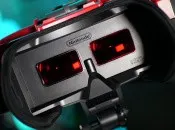
Nintendo Life's review of Zero Racers, a long-rumoured F-Zero spin-off finally released for the Virtual Boy via Nintendo Classics, praises it as one of the console's best titles and a plausible "killer app" had it launched during the system's original 1996 run. Rather than a flat track, players pilot a craft through wireframe tunnels at high speed, diving, climbing and bouncing off surfaces, giving the game a distinct vertical dimension that sets it apart from typical racers. The find matters because it recasts a machine long dismissed as a commercial flop with genuinely strong, previously unreleased software.
The review highlights how the game carries over F-Zero's speed, damage system and pit-stop recharging while adding an extra axis of movement across its 15 courses, rendered as glowing red wireframes against darkness that suit the Virtual Boy's stereoscopic display. It's favourably compared to Red Alarm, another wireframe VB title, but is said to feel faster and more responsive. The reviewer notes the game can be visually intense given the hardware's eye-strain reputation, though a built-in "sleep" option allows breaks between races, and concludes its inclusion alone justifies picking up Nintendo's Virtual Boy peripheral for Switch.
In short
- Zero Racers, a lost F-Zero-style Virtual Boy game, is finally released
- Reviewer calls it the console's best game, a potential killer app
- Wireframe tunnel racing adds vertical movement missing from standard racers
Steelman: both sides, in good faith
The strongest fair case each way — we don't pick a winner.
The case for
Advocates contend that Zero Racers demonstrates the Virtual Boy possessed genuinely capable technology that was undermined by poor software support at launch rather than insurmountable hardware flaws. The game's critical reception and innovative use of stereoscopic 3D effects show what the system could have achieved with a robust early software library. The hardware's limitations were real but addressable through thoughtful game design, and the system offered something genuinely novel that competitors couldn't provide at the time. Had Nintendo backed the system with several titles of this calibre, market perception and consumer adoption might have been substantially different.
The case against
Critics contend that finding one well-regarded game three decades after launch doesn't alter the fundamental hardware problems that doomed the system commercially in 1996. The Virtual Boy caused genuine eye discomfort for many users, featured a monochrome display limiting even by 1996 standards, and suffered from poor ergonomics that no amount of quality software could remedy. These were physical, not software, limitations, and the market's judgment was vindicated by the real constraints of the hardware. Retrospective critical acclaim is interesting but doesn't change the fact that the system's commercial failure was rooted in impractical design, not merely missed software opportunities.
Explained simply
F-Zero is a Nintendo racing series known for futuristic craft, very high speeds and demanding tracks. The Virtual Boy was a short-lived Nintendo console released in 1995, designed to show simple 3D images in red and black; it became a commercial failure and is often remembered for its limited games and eye strain.
Zero Racers was an unreleased game made for the Virtual Boy and based on F-Zero. Its tunnel courses add up-and-down movement to the usual racing, while keeping familiar features such as damage and recharging stops. Its rediscovery matters because it offers a new example of what the Virtual Boy could do, and gives fans a chance to see a lost part of Nintendo’s game history.