Technology news and discussion on TalkFuse.
SpaceX’s first public earnings statement shows the financials of an AI company in 2026
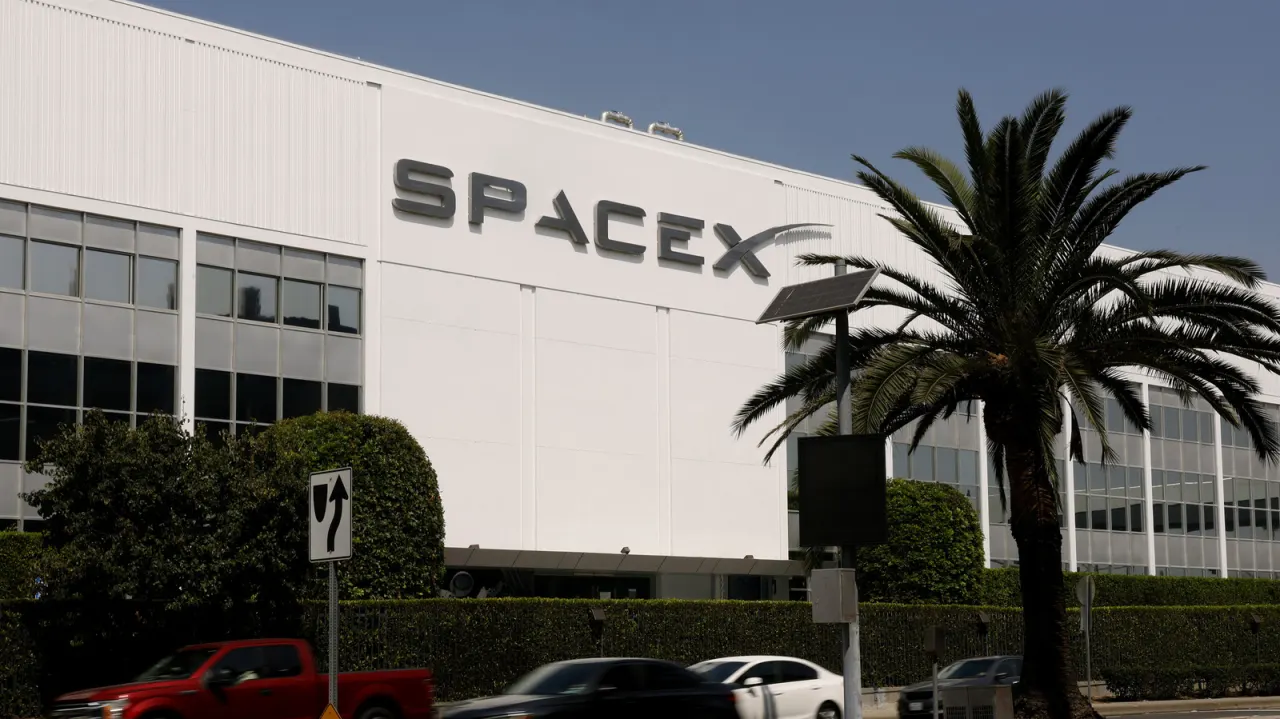
SpaceX has released its first quarterly earnings report since going public on 12 June, offering an unusually detailed look at the costs of running a major AI operation. Overall the company posted a 92% year-on-year rise in revenue to $7.8 billion (£6.1bn) for the quarter and narrowed its net loss to $541 million, from $1 billion a year earlier. The figures are notable because they break out the performance of its AI division, formerly xAI, giving outside observers a rare, definitive view of an AI company's finances rather than estimates from analysts.
The AI unit generated $2.56 billion in revenue, up 247% year-on-year, driven largely by "Cloud Services Agreements" such as widely publicised deals with Anthropic and Google to use SpaceX's data centres; its operating loss narrowed to $1.25 billion from $1.54 billion. However, capital expenditure surged 2,013% year-on-year to $15.8 billion for the quarter, dwarfing the roughly $1.17 billion spent maintaining the rocket-launch business's fixed assets. Anthropic has separately agreed to pay $1.25 billion a month through May 2029 to use SpaceX's Colossus 1 data centre, and analysts are watching how SpaceX's pending Cursor acquisition, expected to close this quarter, will affect the AI division's finances.
In short
- SpaceX's first earnings report reveals steep AI division costs
- AI unit revenue up 247% but CapEx surged over 2,000%
- Anthropic to pay $1.25bn monthly for SpaceX data centre access
Steelman: both sides, in good faith
The strongest fair case each way — we don't pick a winner.
The case for
The financial data demonstrates impressive momentum in SpaceX's AI division, with revenue surging 247% year-on-year to $2.56 billion and the company securing major multi-year contracts extending through 2029 whilst narrowing net losses overall. The substantial capital expenditure of $15.8 billion represents necessary infrastructure investment to capture high-demand cloud computing capacity, consistent with how venture-scale growth companies operate.
The case against
Despite $2.56 billion in quarterly AI revenue, the division posted a $1.25 billion operating loss, and quarterly capital spending of $15.8 billion substantially exceeds total quarterly revenue across the entire business. This raises questions about whether current data centre pricing reflects sustainable market economics or temporary demand dynamics, and whether the AI business can achieve profitability at genuinely competitive market rates.
Explained simply
SpaceX began as a rocket company, launching satellites and spacecraft, and later expanded into satellite internet through Starlink. It also owns an artificial intelligence business, formerly called xAI, which runs data centres and develops AI products. The company’s public listing means its financial results are available to outside investors and the public.
The AI division earns money by providing computing capacity to other technology companies, while spending heavily on data centres and equipment. Its results help show how revenue and running costs compare, though large investments can make it difficult to judge performance from a single quarter.
SpaceX’s figures matter because detailed financial information about AI companies has often been limited. They may help investors and the wider industry assess the scale and costs of building AI services, alongside the company’s established rocket and satellite businesses.
AI Business Companies Space Technology