Culture news and discussion on TalkFuse.
NASA’s PUNCH mission can now accurately predict when solar storms will hit Earth
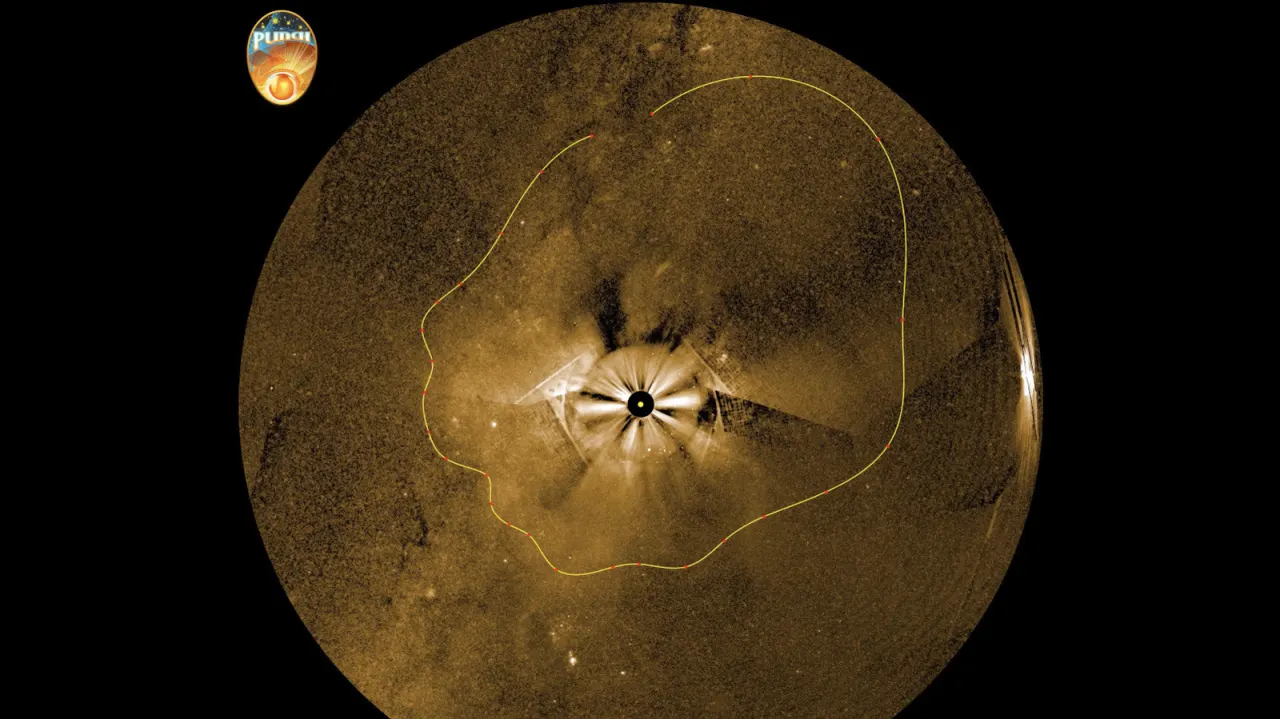
NASA's PUNCH mission has demonstrated it can accurately forecast when solar storms will strike Earth, marking a major step forward in space weather prediction. Using continuous imagery from its constellation of four microsatellites, the mission tracked a coronal mass ejection (CME) from the sun and predicted its arrival time on Earth to within half an hour, a substantial improvement on existing forecasting methods.
The test used data from a CME observed on 31 May 2025, with the model analysing the first 12 hours of the eruption to predict it would hit Earth eight hours later, a forecast that proved accurate to within 30 minutes. Current methods carry an error margin of around five hours, largely because previous instruments could only track roughly a fifth of a CME's journey, whereas PUNCH follows it the whole way, capturing images every four minutes. Better forecasts could help mitigate the effects of geomagnetic storms, which can cause radio blackouts, power outages and disruption to satellites and internet connections. The findings are an initial proof of concept, currently under review for publication in the journal Space Weather.
In short
- PUNCH mission predicted a solar storm's arrival to within 30 minutes
- Far more accurate than current methods' five-hour error margin
- Better forecasts could help limit power, satellite and internet disruption
Explained simply
Solar storms begin with eruptions from the Sun that can send clouds of charged particles towards Earth. When these reach Earth, they can disturb its magnetic environment and affect technology, including satellites, radio links and power networks.
NASA’s PUNCH mission uses four small satellites to image the space around the Sun and track these clouds as they travel. This helps researchers estimate their speed and route; earlier forecasting tools could observe only part of the journey.
More reliable arrival estimates could give operators time to prepare satellites, communications systems and electricity networks for possible disruption. The reported result is an early demonstration based on one eruption, so further work will be needed to assess how well the approach performs in other cases.