Video games news, releases, esports and culture — all the biggest gaming stories in one place.
Big Walk’s Best Feature Is One for the Italians
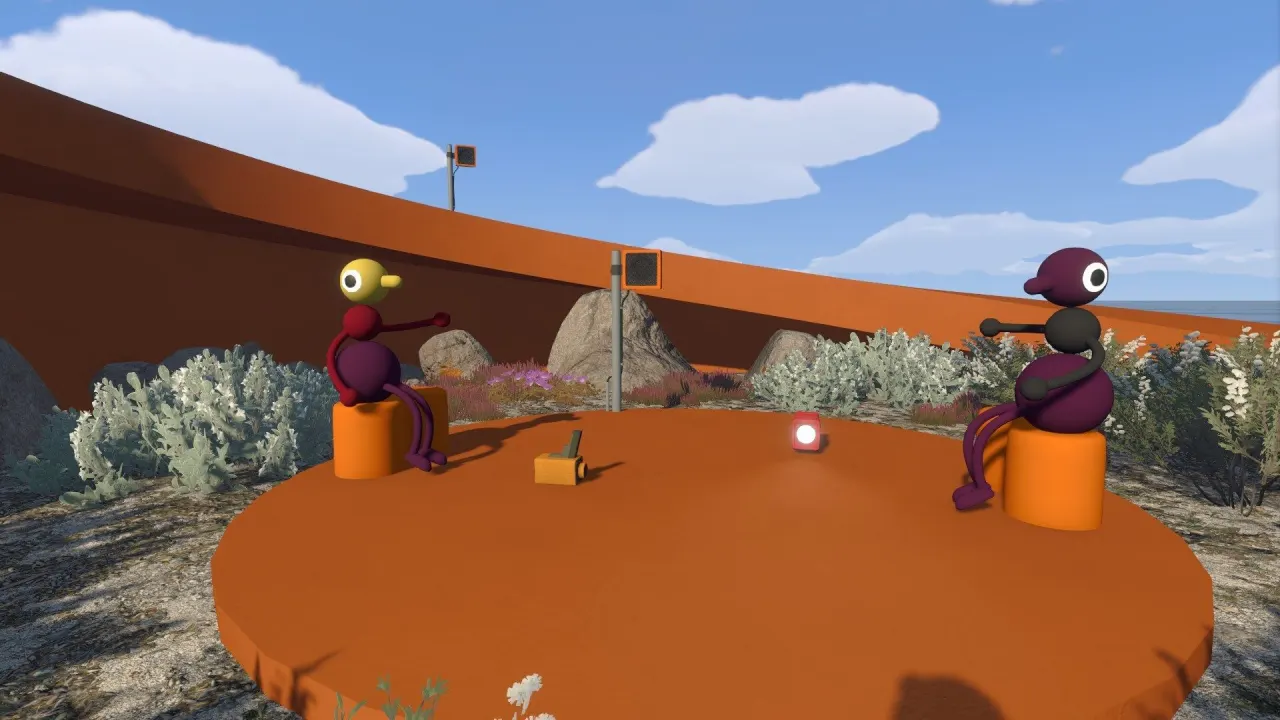
The Polygon writer reflects on Big Walk, a co-op puzzle game from Melbourne studio House House, arguing that its simple hand-gesture controls are its standout feature. Beyond letting players amuse themselves by waving their character's arms, the gestures become a genuine communication tool, echoing the expressive, hands-heavy way the writer's Italian family talks, and they prove essential when the game deliberately restricts verbal chat.
Players control a small, segmented creature with noodly arms that can be raised or extended, and while proximity chat is available, these limited gestures end up doing much of the communicative work. Big Walk regularly separates teammates beyond chat range or behind soundproof barriers, forcing them to rely on pointing, waving and other body language, along with tools like whiteboards, flashlights and laser pointers, to solve coordination-heavy puzzles. The writer praises this as a thoughtful accessibility choice, encouraging players to build a shared non-verbal language together.
In short
- Big Walk is a co-op puzzle game by studio House House
- Hand gestures let players communicate without speaking
- Feature aids accessibility and puzzle-solving under communication limits
Steelman: both sides, in good faith
The strongest fair case each way — we don't pick a winner.
The case for
The gesture-based communication system represents thoughtful game design that encourages creative collaboration and meaningful interaction. By temporarily removing verbal communication, the game forces players to develop a shared non-verbal language together, and for many players—including those who experience anxiety around verbal communication or have certain disabilities—this approach can feel more accessible and less cognitively demanding than constant verbal coordination.
The case against
Deliberately restricting communication options raises legitimate questions about genuine accessibility, as players with disabilities affecting gesture recognition, fine motor control, or visual processing may find the game more exclusionary rather than less. Additionally, forcing non-verbal communication might prioritise experimental design over player experience, risking frustration for those who find non-verbal coordination unintuitive or stressful, suggesting that different approaches might suit different players rather than one restriction suiting all.
Explained simply
Big Walk is a cooperative puzzle game made by Melbourne studio House House. Players guide small creatures through challenges that often require them to work together, using tools such as whiteboards and lights.
The creatures can raise and stretch their arms to point, wave and signal. Players can also talk when they are close enough, but the game sometimes puts teammates out of earshot or behind soundproof barriers, so gestures become a way to share information and coordinate.
The game’s communication system matters because players must find ways to understand one another as they solve puzzles. It also draws on the familiar role of hand gestures in everyday conversation, including in the writer’s Italian family.