Entertainment news and discussion on TalkFuse.
The 1982 song Elvis Costello really wanted David Bowie to sing: “That’s the dream in my head”
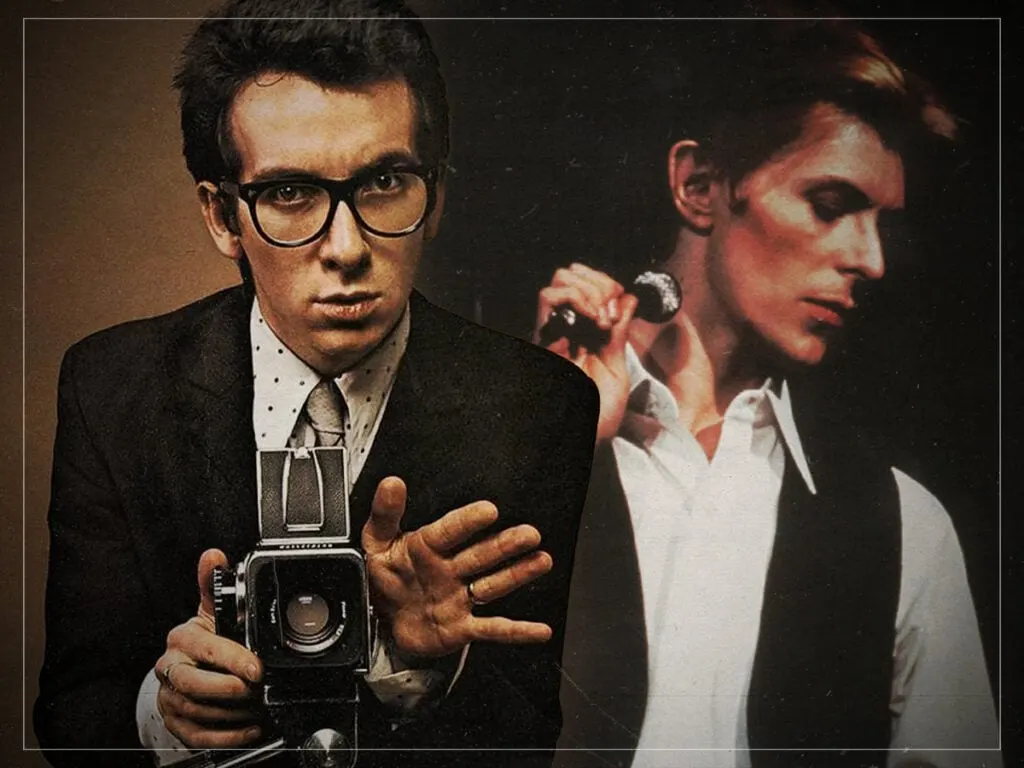
Elvis Costello has revealed that David Bowie once considered recording a version of "Shipbuilding", the poignant 1982 anti-war song written during the Falklands conflict, though the collaboration never happened. Costello, who counted Bowie among his musical heroes, said he learned of Bowie's interest through a mutual friend after Bowie's death in 2016, calling it one of the great missed opportunities of his career.
"Shipbuilding" was originally written by Clive Langer with Robert Wyatt in mind, and Wyatt recorded the definitive version in 1982, a year before Costello released his own take on Punch the Clock, featuring trumpeter Chet Baker. Reflecting on Bowie's unrealised interest, Costello said he still regards Wyatt's recording as the "real" version and his own as "the cover", adding that a Bowie rendition "would have been magnificent" and remains "the dream in my head".
In short
- Bowie reportedly considered covering Costello's "Shipbuilding" but never did.
- Robert Wyatt recorded the original 1982 version; Costello's followed in 1983.
- Costello called a Bowie recording his enduring, unfulfilled musical dream.
Explained simply
“Shipbuilding” was written by Clive Langer and Elvis Costello in 1982, during the Falklands conflict between Britain and Argentina. Its lyrics connect the building of warships with the jobs and livelihoods that war can bring to a shipbuilding town.
Singer Robert Wyatt recorded the first version, which Costello has described as the original; Costello released his own recording the following year, with trumpeter Chet Baker. David Bowie was a singer and songwriter whose work Costello admired, and the reported interest in recording the song links three different artists’ interpretations.
The song matters because it raises questions about the human and economic costs of conflict. Its history also shows how a song can take on different meanings through the voices of the people who record it.