Culture news and discussion on TalkFuse.
EVgo starts building Tesla Superchargers under license
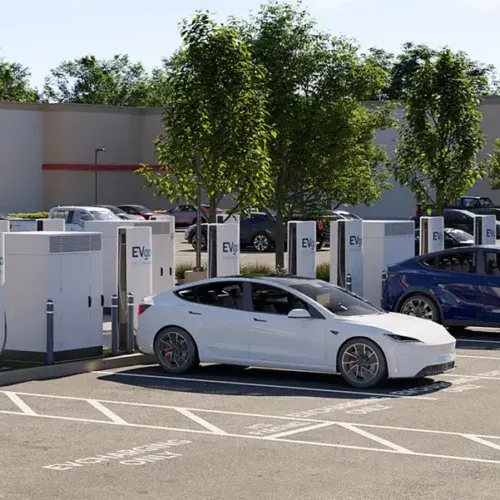
EVgo has begun building Tesla Superchargers under licence, becoming the first US company to deploy license-built versions of Tesla's charging hardware on its own network. The move underscores how far Tesla's Supercharger network has evolved from a closed, brand-exclusive system into an open standard that other automakers and charging companies can adopt, while also giving Tesla a new revenue stream through licensing fees as its core car business faces margin pressure.
EVgo says it will start deploying its own EVgo-made Tesla V4 Superchargers later this autumn, with units capable of delivering up to 500 kW at up to 1,000 V and supporting both NACS and CCS1 plugs. EVgo will own and operate the hardware, handling site hosting, utility connections and pricing, and the chargers will appear in both the EVgo and Tesla apps, including Tesla's in-car navigation and route planner. The company also plans to roll out its own next-generation DC fast chargers by the end of the year, meaning it will run licensed Tesla units alongside its own designs.
In short
- EVgo becomes first US firm to build licensed Tesla Superchargers
- New V4 units deliver up to 500 kW, support NACS and CCS1 plugs
- Chargers roll out this autumn, appearing in Tesla and EVgo apps
Explained simply
Tesla developed its Supercharger network to charge electric cars, initially focusing on its own vehicles. Its charging plugs and technology have since become more widely available to other carmakers and charging companies through licensing.
EVgo is a US company that runs public charging stations. Under the licence, it can build Tesla-designed chargers for its own network, while managing the locations, electricity supply and prices.
The arrangement brings Tesla’s charging technology to more EVgo sites and gives Tesla licence income. It also shows how carmakers and charging firms can share charging systems, which may affect how drivers find and use public fast chargers.
Art Celebrity Culture Entertainment Software Technology