Culture news and discussion on TalkFuse.
Infantino is getting his karmic kicking, but why did football take so long to rebel against Fifa? | Jonathan Liew
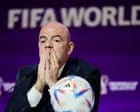
Guardian columnist Jonathan Liew examines the mounting revolt against Fifa president Gianni Infantino, who is reportedly "holed up" in Salé, Morocco, as he tries to save his presidency. Football federation leaders from Uefa, Concacaf and the Asian Football Federation are said to be considering drastic measures, including a "governance boycott" or even a breakaway rival tournament, in response to Infantino's plan to sell off a stake in the World Cup to private investors. The piece questions why such organised resistance has taken so long to materialise, given a long list of prior controversies under his leadership.
Fifa Legends ambassador Luís Figo broke ranks this week, branding Infantino's investor sell-off plan "the lowest, most deceitful and cravenly self-interested behaviour I have ever witnessed" and calling for him to resign. Liew traces the roots of discontent back nearly eight years to Infantino's 2018 deal in principle with Japan's Softbank (backed by Saudi Arabia's public investment fund), through the 2022 Qatar World Cup controversy, Saudi Arabia's contested award of the 2034 World Cup, the forced introduction of the Club World Cup, and the recent barring of referee Omar Artan from a World Cup assignment.
In short
- Federation leaders reportedly plotting a boycott or rival tournament against Fifa
- Fifa Legend Luís Figo publicly calls on Infantino to resign
- Column asks why football's pushback against Infantino took years to emerge
Steelman: both sides, in good faith
The strongest fair case each way — we don't pick a winner.
The case for
Modernising FIFA requires substantial capital investment in global football infrastructure, particularly in developing regions, which private sector partnerships can efficiently provide. Structural reforms and controversial decisions may reflect necessary change rather than governance failures, and bold leadership is required to keep FIFA competitive and serve football's development worldwide.
The case against
The World Cup is football's global institution and should be governed democratically by member federations rather than through privatisation that prioritises profit. Infantino's tenure shows a troubling pattern of governance decisions—including Saudi Arabia's contested World Cup award—that suggests further power concentration poses genuine risks to the sport's independence and integrity.
Explained simply
Fifa is the international body that runs football’s biggest tournaments, including the men’s World Cup. Its president, Gianni Infantino, leads the organisation, while national and regional football federations help govern the game and choose its direction.
Discontent among football officials has built over several years. It has been linked to proposals involving private investors, decisions about where major tournaments are held, changes to the club game and disputes over who gets to officiate at the World Cup.
The debate matters because Fifa’s decisions affect the sport’s competitions, finances and participants around the world. The reported resistance also raises questions about how much influence member federations have over the organisation and how they can challenge its leadership.
Art Celebrity Culture Entertainment Football Sport