US Senate confirms Erica Schwartz to lead CDC after year-long vacancy
Developed over time first seen 2 months ago
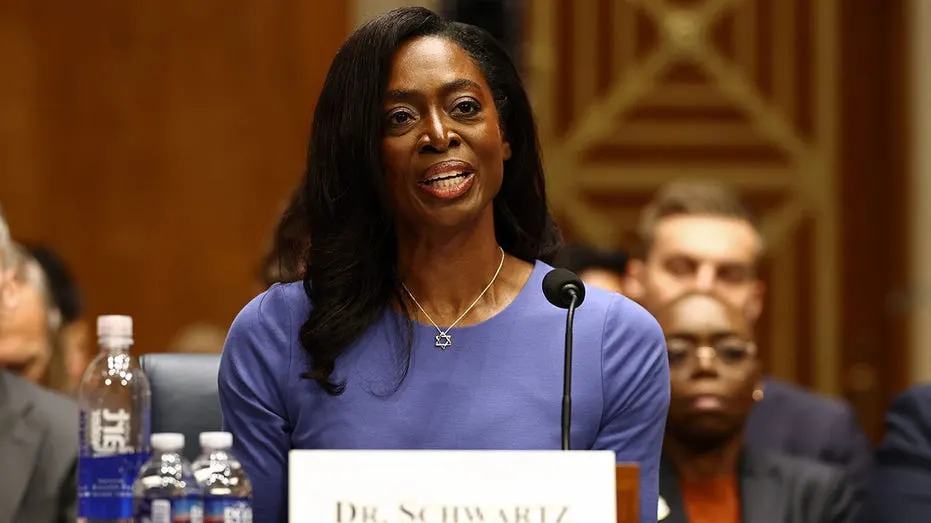
Dr Erica Schwartz has been confirmed by the US Senate as director of the Centers for Disease Control and Prevention, bringing to an end a leadership vacancy at the agency that had lasted for almost a year. Her confirmation is significant given the CDC's central role in shaping public health policy, particularly at a time when its handling of vaccines and other health issues has faced close scrutiny.
The Senate approved her nomination by 51 votes to 44, largely along party lines, with Democratic Senator Tim Kaine of Virginia the only member of his party to support it. Schwartz took up the post immediately, stepping into the role amid an ongoing outbreak of a diarrhoea-causing parasite spreading across the United States, giving her an urgent operational challenge from the outset of her tenure.
- Erica Schwartz confirmed as CDC director after year-long vacancy
- Senate vote 51-44, mostly along party lines
- She starts amid a spreading parasite outbreak in the US
New here? Start with this
Dr Erica Schwartz is a physician who has been nominated to lead the Centers for Disease Control and Prevention, the US government agency responsible for tracking and responding to public health threats such as disease outbreaks and infections. The role had been left unfilled for close to a year, a gap that has drawn attention given the agency's central part in guiding the country's health policy. Senate confirmation was required before she could formally take up the post.
The confirmation vote split largely along party lines in the Senate, reflecting broader political disagreement over health policy, including how the CDC should handle vaccine-related guidance. Such votes typically pit the two main parties against each other, so a senator crossing to vote with the opposing side is notable and points to some degree of bipartisan support alongside the overall partisan split.
The CDC director's job carries immediate practical weight, since the agency oversees the government's response to disease outbreaks across the country. Schwartz takes on the position while officials are already working to contain a spreading outbreak of a parasite that causes diarrhoeal illness, meaning her leadership will be tested on a live public health issue from the outset.
Both sides, in good faith
The strongest fair case each way — we don't pick a winner.
The case for
Supporters of the confirmation argue that ending a near year-long vacancy at the CDC was itself urgent, particularly with a parasitic outbreak actively spreading, and that the agency needed decisive leadership rather than further delay. They see Dr Schwartz as someone willing to reassess established vaccine guidance in light of public scepticism and evolving evidence, arguing that a degree of institutional self-scrutiny can strengthen long-term public trust rather than undermine it. They also note that she was confirmed through the ordinary constitutional process, including support from at least one senator outside her own party, which they regard as sufficient democratic legitimacy for the role.
The case against
Critics of the confirmation argue that a near party-line vote signals a troubling lack of broad, cross-party confidence in a role that has traditionally depended on being seen as scientifically neutral rather than politically aligned. They worry that a director associated with departures from mainstream vaccine consensus could weaken the clarity and credibility of public health messaging at precisely the moment the agency must respond to an active outbreak. For these critics, the concern is less about any individual's motives and more about the risk that thin bipartisan backing leaves the CDC's guidance more vulnerable to being perceived as partisan, potentially undermining public compliance with future health recommendations.
Coverage
- Fox News — Senate confirms new CDC director as diarrhea-causing parasite outbreak sweeps US
- The Hill — Senate confirms Erica Schwartz as new CDC leader
Americas Art Culture Elections Government Health Medicine Politics World